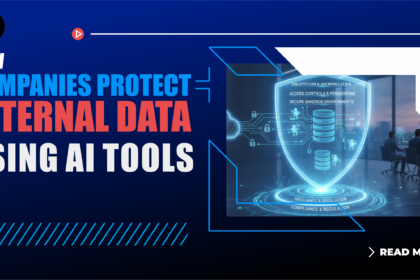
How Companies Protect Internal Data While Using AI Tools
Your company’s internal data is at risk every time someone uses AI…

AI compliance refers to the set of policies, processes, technical controls, and documentation that ensure artificial intelligence systems operate within legal, ethical, and organizational requirements. It covers everything from data collection and privacy to model development, testing, deployment, monitoring, and explainability. AI compliance sits at the intersection of regulatory law, risk management, and technical governance, and is essential for companies that rely on AI to make business decisions or interact with customers.
Effective AI compliance programs include both organizational and technical elements. Key components are:
Organizations must navigate a patchwork of rules and guidance. Important references include:
Several vendors and open-source projects provide features to simplify compliance:
An AI resume-screening tool must avoid discriminatory outcomes. Companies implement fairness testing during development, keep audit logs, and require human review for certain decisions. Tools that generate model cards and disparate impact reports are commonly used to document compliance.
Financial institutions must comply with fair lending laws. An AI-driven credit model will need transparent features, explainability for adverse action notices, and rigorous bias testing. Banks often use explainability libraries and maintain strong model governance to satisfy regulators.
Clinical AI systems require evidence of validity and safety. Organizations use explainability, clinical trials, and comprehensive documentation, and integrate monitoring systems to detect performance drift across demographic groups.
Conversational agents that provide advice (e.g., financial or legal) require policies to disclose limitations and escalate to human agents when necessary. This intersects with ongoing work on responsible agents and ties to the AI Agents and AI Automation categories.
Practical steps for companies building or deploying AI:
AI compliance is not isolated—it’s integrated with product development, security, and automation. For instance, developers using AI Builders need to bake compliance into model design, while security teams in AI Security implement controls to protect data and models. Automation and productivity projects in AI Automation and AI Productivity require guardrails to prevent non-compliant behavior.
Explore related content on practical implementations and tooling:
AI compliance is a multidisciplinary practice that enables organizations to deploy AI safely, ethically, and lawfully. By combining strong governance, technical controls, continuous monitoring, and clear documentation, businesses can reduce risk, build trust, and unlock the full potential of AI. For teams building agent-driven systems, automation pipelines, or customer-facing AI, integrating compliance from day one is essential—see related topics in AI for Business, AI Agents, and AI Design for practical guidance and implementation strategies.
Your company’s internal data is at risk every time someone uses AI…