Tag: Ai Content Repurposing

Ai Content Repurposing

What is AI content repurposing?

AI content repurposing is the practice of using artificial intelligence tools and workflows to transform existing pieces of content into new formats, tailored messages, and distribution-ready assets. Instead of creating from scratch, businesses use AI to convert long-form content (like webinars, whitepapers, or podcasts) into multiple micro-assets — social posts, videos, summaries, images, ads, or email sequences — that reach different audiences and platforms.

Why AI-driven repurposing matters

Repurposing content has always been a smart marketing tactic. Adding AI makes the process faster, more consistent, and scalable. Key benefits include:

  • Increased reach: One piece of content can become many formats — expanding audience touchpoints across platforms like YouTube, LinkedIn, Instagram, email, and paid channels.
  • Better ROI: Maximize the value of high-effort content (e.g., reports or webinars) by extracting dozens of assets with minimal additional cost.
  • Faster production: AI automates transcription, summarization, captioning, and creative generation, dramatically cutting turnaround times.
  • Consistency and personalization: AI can adapt messaging for segments, A/B test variants, or localize content while keeping brand voice consistent.
  • SEO and discoverability: Transformations like creating blog posts from audio or video with AI-generated transcripts improve search indexing and long-tail keyword coverage.

Common applications and use cases

AI content repurposing is applicable across marketing, sales, customer success, and internal communications. Here are practical use cases:

  • Webinar to multi-channel campaign: Use AI to transcribe a webinar, auto-generate a long-form blog, extract 30–60 second clips for social video ads, create image quote cards, and produce an email nurture sequence.
  • Podcast episode → article + social snippets: Transcribe with an AI tool, summarize into a blog post, create tweet threads, and generate audiograms for Instagram and LinkedIn.
  • Whitepaper → infographic + slide deck: Use AI summarizers to pull key points, convert data into visual charts, and build a slide deck or LinkedIn carousel for executives.
  • Long-form video → shorts and captions: Automatically detect highlights and cut short-form videos optimized for TikTok, YouTube Shorts, and Reels with AI scene detection and captioning.
  • Case studies → ad creatives: Extract compelling results and client quotes to generate ad headlines, copy variants, and image suggestions using AI ad creative tools.

Real-world tools and platforms

There are many AI tools that make repurposing practical today. Examples include:

  • Descript — Transcription, audio/video editing, filler word removal, and multi-format exports (podcasts to video snippets).
  • Otter.ai and Rev.ai — High-quality automated transcription for turning audio into editable text.
  • Lumen5 and Veed.io — Turn blog posts or scripts into videos optimized for social platforms.
  • Synthesia and Murf.ai — AI avatar and voice-over generation for producing quick explainer videos and multilingual output.
  • Canva (AI features) and Adobe Express — Auto-generate graphics, social carousels, and video templates from text or brand assets.
  • Jasper, ChatGPT, and other LLMs — Summaries, outlines, rewrite variations, and SEO-focused blog drafts from transcripts or reports.
  • Headliner — Create audiograms and social-ready clips from podcast episodes.

Concrete repurposing workflows (step-by-step)

Example 1 — Webinar to omnichannel campaign

  • Transcribe the webinar with Otter.ai or Descript.
  • Use an LLM (ChatGPT / Jasper) to generate a long-form blog, FAQ page, and key takeaways.
  • Identify clips with Descript/Lumen5 and create 6–10 short videos for social.
  • Create quote graphics and a LinkedIn carousel in Canva using extracted statistics and quotes.
  • Automate distribution and scheduling with tools in the AI Automation toolkit.

Example 2 — Podcast episode to lead magnet

  • Transcribe and summarize the episode with an LLM.
  • Convert key segments into a blog post and SEO meta descriptions.
  • Produce audiograms for Instagram and short clips for YouTube Shorts using Headliner or Veed.io.
  • Create a downloadable PDF of highlights to use as a gated lead magnet.

Best practices for effective AI repurposing

  • Start with quality source content: High-value originals (well-researched whitepapers, polished webinars) produce better repurposed assets.
  • Maintain brand voice: Use AI prompts and style guides to keep tone consistent across formats.
  • Optimize for each platform: Don’t just copy-paste — adapt aspect ratios, copy length, and calls-to-action for native experiences.
  • Human review is essential: Always proof AI-generated copy and check factual accuracy, especially for data-driven pieces.
  • Measure and iterate: Track performance (clicks, retention, conversions) and let AI generate new variants based on top performers.

Challenges and ethical considerations

AI makes repurposing fast, but there are risks:

  • Quality and accuracy: AI summarizers can hallucinate or misstate facts — human editing is required.
  • Copyright and attribution: Ensure source content owners are credited and repurposed assets comply with licensing.
  • Over-automation: Excessive automation can create repetitive or low-value outputs; focus on creative amplification, not mass duplication.

How AI repurposing ties to broader AI strategies

AI content repurposing intersects with multiple AI domains. For streamlined pipelines, integrate repurposing into:

Further reading and related tags

Explore related topics to design better workflows and tools:

Getting started checklist

  • Audit your content library and identify evergreen assets.
  • Choose core AI tools: transcription, LLM for summarization, and a video/graphic generator.
  • Define templates for each output type (blog post, short video, carousel, ad).
  • Set a schedule and measurement plan to iterate on formats that drive conversions.

AI content repurposing is not just a time-saver — it’s a strategy for amplifying value, improving SEO, and delivering targeted experiences across channels. With the right tools, workflows, and governance, businesses can transform single pieces of content into a sustained, multi-channel engine for growth.

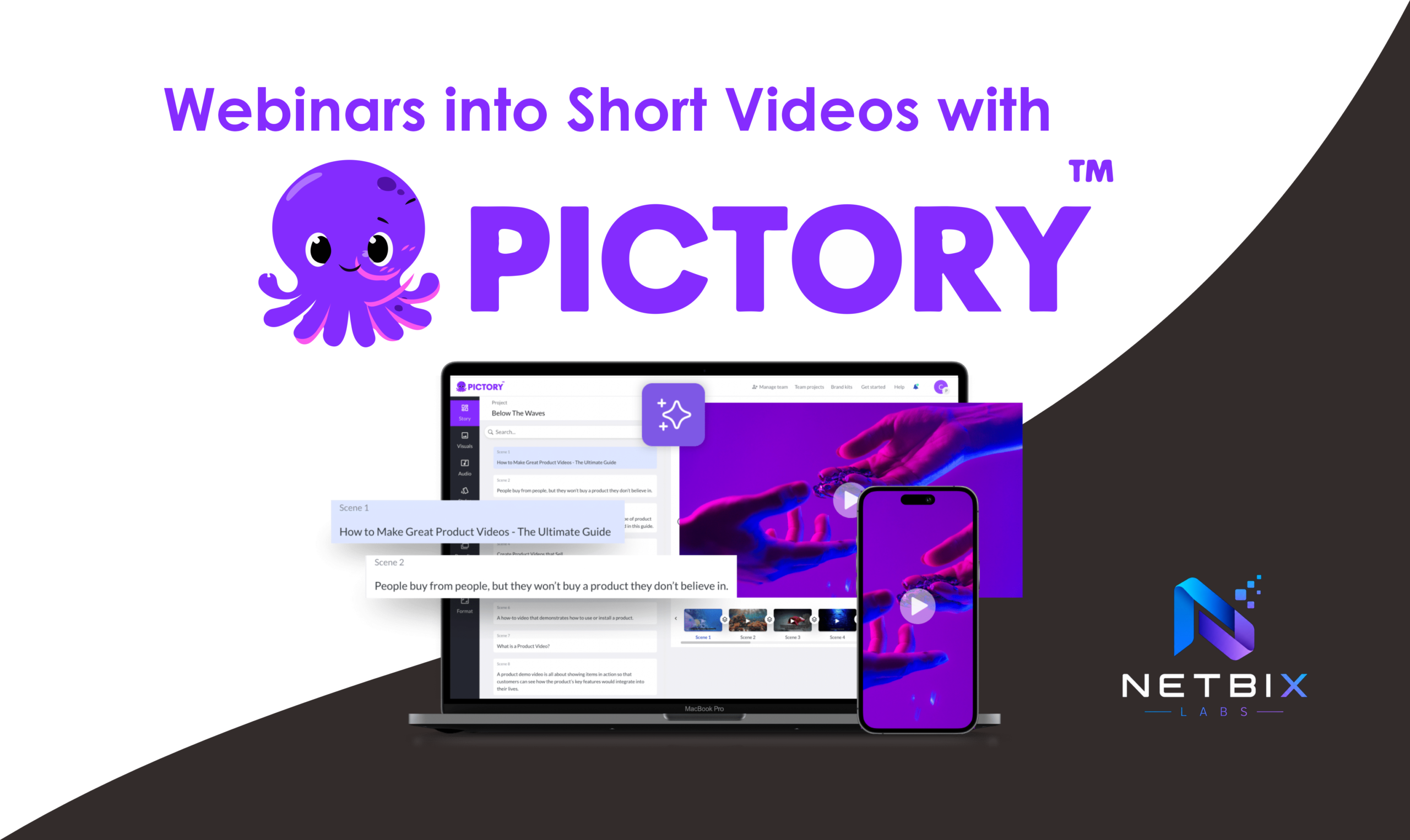
How Businesses Repurpose Webinars into Short Videos with Pictory AI

Learn how businesses turn webinars into social-ready clips using Pictory AI. Step-by-step…

Iqbal