Tag: Ai Data Protection

Ai Data Protection

What “AI data protection” means

AI data protection refers to the strategies, technologies, and processes used to secure data used by artificial intelligence systems across its lifecycle — from collection and labeling through training, inference, and model sharing. It goes beyond traditional IT security by addressing unique risks that arise when data is used to build and operate machine learning models: data leakage, model inversion, membership inference, and unauthorized regeneration of sensitive information.

Why AI data protection matters for business

As companies adopt AI for customer personalization, fraud detection, medical diagnostics, and automated decision-making, the data involved becomes both a competitive asset and a liability. Poor AI data protection can cause:

  • Regulatory fines and legal exposure (GDPR, CCPA, HIPAA)
  • Loss of customer trust after breaches or inadvertent disclosures
  • IP leakage when models reveal proprietary or sensitive patterns
  • Operational risk from poisoned or biased training data

Protecting data used by AI models is therefore essential not only for compliance but also for preserving business value and reducing risk.

Core principles and techniques

Effective AI data protection relies on a combination of technical controls, policies, and governance. Key techniques include:

  • Data minimization: Collect and retain only what is necessary for the AI use case.
  • Encryption: Encrypt data at rest and in transit; use key management services and hardware security modules.
  • Access controls and auditing: Role-based access, fine-grained permissions, and immutable logs for model training and inference.
  • Differential privacy: Add mathematically quantified noise during training or query responses to prevent re-identification and membership inference.
  • Federated learning: Train models across devices or silos without centralizing raw data.
  • Homomorphic encryption and secure multi-party computation (MPC): Run computations on encrypted data or jointly compute results without revealing inputs.
  • Synthetic data: Generate realistic but non-identifiable datasets for testing and model development.
  • Model governance and monitoring: Monitor models for leakage, drift, and anomalous outputs; maintain data lineage and versioning in MLOps pipelines.

Technical examples

  • Differential privacy libraries: TensorFlow Privacy, PySyft (OpenMined) implementations.
  • Homomorphic encryption: Microsoft SEAL and PALISADE for encrypted model inference.
  • Federated learning frameworks: TensorFlow Federated, PySyft.
  • Secure enclaves: Intel SGX and AWS Nitro Enclaves for trusted execution environments.
  • Data loss prevention tools: Google Cloud DLP, AWS Macie for scanning and classifying sensitive data.

Business applications and concrete use cases

AI data protection applies across industries. Here are practical examples:

1. Customer personalization in retail

Retailers use customer purchase and behavior data to power recommendation engines. To protect privacy, teams can implement differential privacy during offline model training and use synthetic datasets for A/B tests. Tools such as Snowflake (with secure views) or Google Cloud DLP can classify PII before it enters ML pipelines.

2. Healthcare diagnostics

Hospitals and medtech companies train models on patient records and imaging. AI data protection here requires HIPAA controls, strong encryption, and federated learning to enable multi-institutional training without sharing raw patient data. Platforms like NVIDIA Clara and frameworks that support federated setups are commonly used.

3. Financial services and fraud detection

Banks analyze transaction histories and identity signals. They apply strict access controls, encryption, and model monitoring to prevent unauthorized exposure of sensitive patterns. Companies may use privacy-preserving computation and secure MPC for cross-institution fraud models.

4. Model-as-a-Service and APIs

When providing AI models via APIs, providers must avoid returning or regenerating sensitive data embedded in training sets. Strategies include prompt filtering, input/output redaction, rate limiting, and implementing differential privacy on answer synthesis.

Tools, platforms, and real-world examples

Organizations combine cloud services, open-source libraries, and enterprise platforms to implement AI data protection:

  • Cloud data protection: Google Cloud DLP, AWS Macie, Azure Purview for classification and policy enforcement.
  • Privacy libraries: TensorFlow Privacy for differentially private training; PySyft from OpenMined for federated and encrypted learning.
  • Encryption frameworks: Microsoft SEAL for homomorphic encryption, hardware-based enclaves like Intel SGX.
  • Data governance & access: Immuta, Privacera, Collibra for policy-driven data access and audit trails.
  • MLOps and monitoring: Databricks, MLflow, Tecton with integrated lineage and model monitoring to detect leakage or drift.

Implementation roadmap for businesses

Adopt a staged approach to secure AI data:

  • Assess risk: Identify sensitive data and high-risk AI use cases (customer IDs, health data, financial signals).
  • Classify and minimize: Catalog data, apply classification tools, and reduce retention.
  • Build privacy into pipelines: Use anonymization, synthetic data, or differential privacy where applicable.
  • Secure infrastructure: Encrypt, segment networks, and use hardware enclaves for critical workloads.
  • Govern and monitor: Implement model governance, logging, and continuous monitoring for anomalous outputs.
  • Train people: Educate data scientists and developers on secure data handling and privacy-preserving ML techniques.

Regulatory compliance and best practices

AI data protection intersects with privacy regulations like GDPR, CCPA, and sector rules such as HIPAA. Best practices include:

  • Maintaining data lineage and consent records
  • Documenting privacy risk assessments for AI models
  • Applying privacy-by-design and data protection impact assessments (DPIAs)
  • Enforcing contractual and technical controls when sharing data or models with third parties

Related topics and further reading

Explore adjacent areas that complement AI data protection efforts:

  • AI Security — for technical and operational controls protecting AI systems.
  • AI for Business — practical deployments and risk management in enterprise AI.
  • AI Automation — automation pipelines where data protection must be integrated.
  • AI Agents — autonomous systems that require specific safeguards for data used during interactions.

Related tags with hands-on resources and examples: agency ai tools, ai agents automation, ai agents business, ai analytics dashboard.

Conclusion

AI data protection is a multidisciplinary requirement that combines privacy engineering, security controls, governance, and operational practices. Properly implemented, it allows organizations to unlock the value of AI while minimizing legal, reputational, and operational risks. Start with risk assessment and data classification, then adopt privacy-preserving techniques and robust monitoring so your AI initiatives scale safely and responsibly.

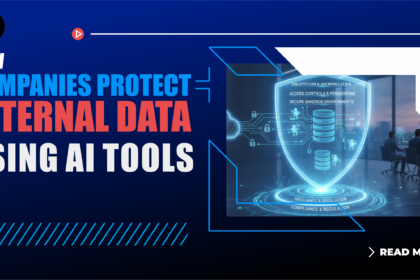
How Companies Protect Internal Data While Using AI Tools

Your company’s internal data is at risk every time someone uses AI…

Iqbal