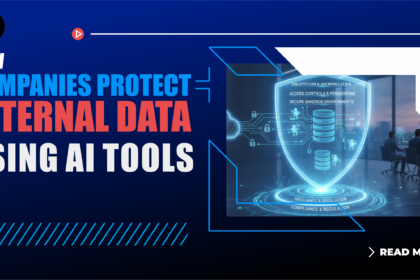
How Companies Protect Internal Data While Using AI Tools
Your company’s internal data is at risk every time someone uses AI…

AI data security refers to the set of technologies, processes, and policies that protect the data used to build, train, validate, and operate artificial intelligence systems. This includes protection of raw training data, feature stores, model parameters, inference inputs/outputs, and metadata across the entire AI lifecycle. Because AI models are both data consumers and producers, securing that data requires specialized controls that go beyond traditional IT or application security.
AI systems can dramatically improve business outcomes, but they also introduce unique risks. Poorly protected training data can leak sensitive information, models can be stolen or manipulated, and adversarial attacks can cause incorrect or harmful outputs. For regulated industries like healthcare and finance, failure to secure AI data can lead to legal exposure, compliance violations (HIPAA, GDPR, PCI DSS), and reputational damage.
Key reasons AI data security is essential:
Securing AI data combines principles from cybersecurity, privacy engineering, and MLOps. Key approaches include:
Here are concrete tools and platforms used to implement AI data security practices in production:
Practical steps teams can adopt:
AI data security is tightly connected to other AI disciplines. For example, secure automation and orchestration of models intersects with AI Automation and AI Agents when autonomous agents access datasets. Productive, secure AI systems are also part of AI Productivity initiatives and enterprise deployments covered in AI for Business. Teams building secure data pipelines will often partner with teams in AI Builders and apply design best practices from AI Design.
Explore related practical content like agent automation and analytics best practices for secure AI implementations:
AI data security continues to evolve. Expect wider adoption of privacy-preserving training (federated learning, secure enclaves), improvements in formal privacy guarantees (differential privacy at scale), and industry standards around model governance and certification. Organizations that integrate robust AI data security early will preserve trust, reduce risk, and unlock more aggressive but safe use of AI across the enterprise.
AI data security is a foundational requirement for responsible AI. Combining the right mix of technology, processes, and governance protects sensitive information while enabling organizations to innovate with confidence. For teams building secure AI solutions, start with a clear data inventory, apply privacy-enhancing technologies, and operationalize monitoring and governance across the model lifecycle.
Your company’s internal data is at risk every time someone uses AI…