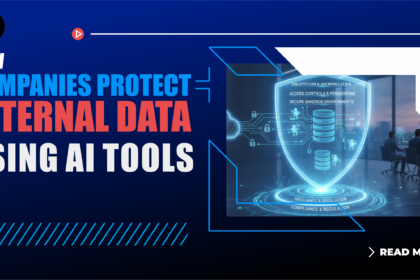
How Companies Protect Internal Data While Using AI Tools
Your company’s internal data is at risk every time someone uses AI…


AI privacy business refers to the practices, technologies, policies, and organizational strategies that ensure artificial intelligence systems handle personal and corporate data safely, ethically, and in compliance with legal requirements. It sits at the intersection of data privacy, AI development, and business operations — ensuring models, pipelines, and AI-driven services preserve confidentiality, respect consent, and reduce privacy risk while delivering value.
As companies adopt AI for customer service, personalization, analytics, and automation, they collect and process increasing volumes of sensitive information. Weak privacy practices can cause regulatory fines, reputational damage, loss of customer trust, and security incidents. Good AI privacy protects customers and employees, reduces legal exposure, and enables scalable AI adoption that stakeholders trust.
Implementing AI privacy requires a combination of technical techniques, governance, and operational controls:
AI privacy applies across many business functions. Below are concrete examples showing how businesses can combine privacy and AI to produce safe outcomes.
Companies deploy AI-powered virtual assistants that often handle personally identifiable information (PII). Applying redaction, PII detection, and access controls prevents sensitive data from being logged in model training datasets. Enterprises can also route sensitive queries to secure human review while keeping analytics on anonymized transcripts.
Personalization engines can use differential privacy and aggregated cohort modeling to deliver targeted offers without exposing individual customer profiles. Retailers and ad platforms can use synthetic data or privacy-preserving analytics to refine campaigns while minimizing direct exposure of customer records.
Banks and insurers use federated learning to train fraud models across multiple institutions without sharing raw transaction data. This enables better detection across broader datasets while preserving confidentiality between participants.
Hospitals and research organizations apply federated learning, de-identification, and privacy-preserving analytics to build predictive models on medical records and imaging data without centralizing sensitive patient data, complying with HIPAA-type requirements.
HR teams apply anonymization, access controls, and strict retention policies when building AI-driven talent matching, attrition prediction, or performance analytics to avoid exposure of personally sensitive employee data.
Autonomous agents and automated workflows that access multiple systems must use least-privilege principles and data minimization. Learn more about safe agent design in our AI Agents and AI Automation categories.
Examples of widely used tools, platforms, and techniques businesses use to implement AI privacy:
AI privacy requires coordination between legal, security, data science, and product teams. Implement
Data Protection Impact Assessments (DPIAs), maintain auditable logs, and align model practices with regional laws such as GDPR and CCPA. Regular audits, incident response plans, and cross-functional review boards help reduce regulatory and operational risk.
Despite techniques and tools, companies face several challenges:
Expect continued advances in privacy-preserving ML, stronger regulation, and more standardized privacy certifications for AI systems. Emerging capabilities like hardware-backed secure enclaves, better synthetic data, and automated privacy compliance tools will make it easier for businesses to scale AI responsibly. Integrating privacy with broader AI Security and operational workflows (see ai agents automation and ai agents workflow) will be a competitive differentiator.
To explore implementations and operational strategies, visit our related categories and tag pages:
Implementing strong AI privacy is not optional—it’s a business imperative. By combining technical measures, governance, and vendor controls, organizations can unlock AI value while protecting people and preserving trust.
Your company’s internal data is at risk every time someone uses AI…