Tag: AI Content Automation

AI Content Automation

What is AI content automation?

AI content automation refers to the use of artificial intelligence models, machine learning pipelines, and integrated automation tools to generate, optimize, distribute, and measure content with minimal human intervention. Instead of manually ideating, drafting, editing, and publishing every asset, organizations can use AI to accelerate repetitive tasks, scale content volume, personalize at scale, and maintain consistency across channels.

Why AI content automation matters

In modern digital marketing and enterprise knowledge management, speed, scale, and relevance determine impact. AI content automation unlocks:

  • Faster production: Draft blog posts, product descriptions, or social captions in minutes.
  • Consistency: Apply brand voice and SEO rules automatically across thousands of pages.
  • Personalization: Tailor messages by segment, behavior, or lifecycle using dynamic templates.
  • Cost-efficiency: Reduce manual editing and research time, freeing teams for strategy and creativity.
  • Data-driven optimization: Use analytics to refine copy, headlines, and creative automatically.

Core applications and workflows

AI content automation appears across the content lifecycle. Typical workflows include:

  • Ideation: AI suggests topics, headlines, and content outlines based on keyword data and audience intent.
  • Drafting: Large language models (LLMs) create initial drafts for blogs, emails, ads, and product pages.
  • Optimization: Tools automatically optimize for SEO, readability, tone, and brand guidelines (e.g., SurferSEO, MarketMuse).
  • Multimedia creation: Convert text to video, voice, or images with platforms like Descript, Synthesia, Pictory, and Canva’s generative features.
  • Publishing & distribution: Automated scheduling and syndication to CMS, social platforms, and email systems via integrations (Zapier, Make, n8n).
  • Measurement & iteration: A/B testing, analytics-driven rewrites, and automated reporting to refine future content.

End-to-end example workflow

A typical automated campaign might look like this:

  • Keyword research suggests topic clusters → AI generates article outlines and drafts (OpenAI GPT-4 / Claude).
  • SEO tool (SurferSEO / Frase) adjusts headings and meta to target long-tail queries.
  • Automated editor (Grammarly / Hemingway) polishes tone and grammar.
  • CMS receives content via API and schedules publication; social snippets are auto-created and queued in a scheduler (Hootsuite / Buffer).
  • Performance data funnels into dashboards; AI suggests retargeting creative or rewrites based on engagement metrics.

Concrete examples and real-world tools

Below are specific tools and use cases that illustrate how AI content automation is used in practice:

  • Blog and long-form content: Jasper, Writesonic, Copy.ai, and OpenAI’s GPT family can draft posts; Frase and SurferSEO optimize for search intent.
  • Product descriptions at scale: E-commerce platforms use templates + LLMs to generate thousands of unique product descriptions automatically, reducing time-to-market.
  • Email and lifecycle campaigns: HubSpot, Mailchimp, and Klaviyo integrate AI to personalize subject lines, body copy, and send-time optimization.
  • Social media & ads: Tools like Canva, Lumen5, and AI ad copy platforms automatically create text and creative variations; platforms like Phrasee and Persado optimize language for conversion.
  • Video and audio automation: Descript, Pictory, and Synthesia transform blog posts into narrated videos or AI-hosted explainer clips for repurposing content at scale—see category AI Video.
  • Autonomous content agents: Automated agents can research, draft, publish, and monitor content pipelines. Explore concepts in AI Agents and related workflows like ai agents automation and ai agents workflow.

Use cases by industry

  • Agencies: Agencies scale client output with templates and automation—see tools in agency ai tools.
  • Retail & e-commerce: Auto-generate localized product copy and SEO pages for thousands of SKUs.
  • SaaS & B2B: Maintain up-to-date knowledge bases, automatic release notes, and onboarding guides.
  • Media & publishers: Rapidly produce summaries, social clips, and multilingual editions.
  • Performance marketing: Create and test dozens of ad variants automatically—paired with AI for ai ad creatives.

Implementing AI content automation: practical steps

To adopt AI content automation effectively, follow a pragmatic roadmap:

  • Define goals: Identify where automation saves time or increases revenue (e.g., faster publishing, higher conversion rates).
  • Select tools: Combine LLMs (OpenAI, Anthropic) with SEO tools (SurferSEO, MarketMuse) and workflow automation (Zapier, Make).
  • Build templates: Create brand-consistent templates for emails, product pages, and social posts.
  • Set guardrails: Quality checks, human review gates, and content approval workflows to ensure brand safety.
  • Integrate measurement: Connect analytics to enable AI-driven revisions—see examples in ai analytics workflow.
  • Scale gradually: Start with a single campaign or content type, measure results, then expand.

Risks, challenges, and best practices

AI content automation is powerful but not without risk:

  • Quality drift: Automated output can diverge from brand voice—implement editorial QA and feedback loops.
  • SEO pitfalls: Thin or duplicate content can harm rankings; combine AI with SEO tools and human editing.
  • Compliance & safety: Use moderation, fact-checking, and guardrails to avoid misinformation—see AI Security considerations.
  • Over-reliance: Maintain human oversight for strategy, creativity, and sensitive content.

Where content automation intersects with other AI domains

AI content automation is deeply connected to other AI capabilities. For example:

Future trends

Expect continued advances in:

  • Multimodal automation: Seamless workflows that move from text to video to voice automatically.
  • Smarter personalization: Real-time dynamic content adjustments driven by user signals.
  • Autonomous content agents: Agents that research, create, publish, and iterate strategy with limited human input.
  • Integrated analytics: AI that not only produces content but also designs experiments and optimizes based on performance.

Conclusion

AI content automation is a strategic capability for modern organizations seeking to scale content, improve personalization, and accelerate time-to-value. By combining LLMs, SEO tools, multimedia generators, and automation platforms—and by applying clear guardrails—businesses can reap efficiency gains while preserving quality and compliance. For agencies, marketers, and product teams exploring this space, start small, measure rigorously, and expand automation where it demonstrably improves outcomes. For related resources and deeper workflows, explore AI Automation and the linked topics above to see specific examples, tools, and tutorials.

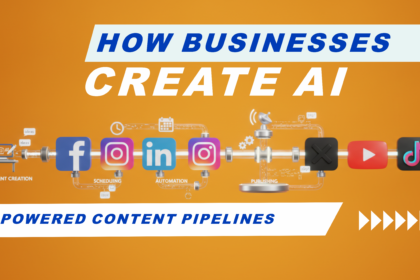
How Businesses Create AI-Powered Content Pipelines

Learn how businesses build AI-powered content pipelines using Buffer — from ideation…

Iqbal