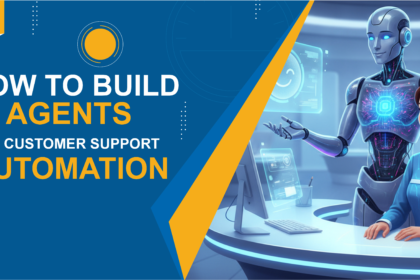
How to Build AI Agents for Customer Support Automation
Learn how to build an AI agent for customer support automation using…

The term ai chatbot business refers to the deployment and use of intelligent conversational agents—powered by natural language processing (NLP), machine learning, and automation—within a commercial or organizational context. These chatbots handle customer interactions, automate workflows, qualify leads, provide product recommendations, and serve as virtual employees across sales, support, HR, and operations.
In an era where customers expect instant, personalized experiences, AI chatbots for business deliver 24/7 availability, faster response times, and scalable interactions at lower cost than fully human teams. Companies use chatbots to:
Beyond operational savings, chatbots drive measurable business outcomes: higher customer satisfaction (CSAT), shorter time-to-resolution, and uplift in sales conversions when combined with CRM and marketing automation platforms.
AI chatbots can answer FAQs, troubleshoot common issues, escalate complex tickets to human agents, and perform post-resolution surveys. Real-world deployments include Zendesk Answer Bot and Intercom’s conversational automations that integrate with support systems to lower ticket volumes.
Chatbots engage website visitors, qualify leads with targeted questions, book demos, and push qualified leads into CRM systems like Salesforce. Sales-focused chatbots such as Drift and ManyChat can trigger personalized flows that increase demo bookings and conversion rates.
Enterprises use chatbots for HR onboarding, IT helpdesk automation, policy lookup, and expense guidance—reducing burden on internal teams and speeding up employee productivity. These internal assistants often connect to identity systems and knowledge bases.
Conversational AI can recommend products based on user intent, past purchases, and contextual signals, often integrated into messaging channels or in-app experiences. Landbot and Shopify-integrated bots are common examples in retail.
Advanced NLP and translation models allow chatbots to converse in multiple languages, expanding business reach without proportional increases in staffing.
Companies choose solutions based on scale, customization needs, and channel preferences. Below are representative platforms across categories:
Effective chatbot initiatives tie into business systems and analytics pipelines. Typical integrations include CRM (Salesforce), helpdesk (Zendesk), marketing automation, and ERP systems. Tracking the right KPIs is essential:
For deeper insights, teams pair chatbots with analytics dashboards to monitor funnel drop-offs, sentiment trends, and agent handoff performance. See related work on ai analytics dashboard.
Modern chatbot deployments increasingly blend with broader AI agent and automation ecosystems. Combining chatbots with autonomous agents enables multi-step workflows—booking, billing, and follow-up—without human intervention. Explore related strategies in our AI Agents and AI Automation categories.
Agencies and teams building chatbot solutions use no-code and low-code builders to accelerate time-to-market—see resources in AI Builders and topics under agency ai tools when evaluating vendor stacks.
For practical guides and deep dives on building conversational workflows and agent-driven automations, explore our posts on AI for Business, AI Productivity, and tags like ai agents business and ai agents automation. If you’re an agency or consultant evaluating toolkits, see agency ai tools for vendor comparisons and deployment templates.
ai chatbot business is no longer an experimental add-on—it’s a strategic capability that improves customer experience, automates repetitive work, and unlocks measurable revenue and efficiency gains. By selecting the right platform, integrating with existing systems, and measuring impact, businesses of every size can harness conversational AI to work smarter, faster, and at scale.
Learn how to build an AI agent for customer support automation using…