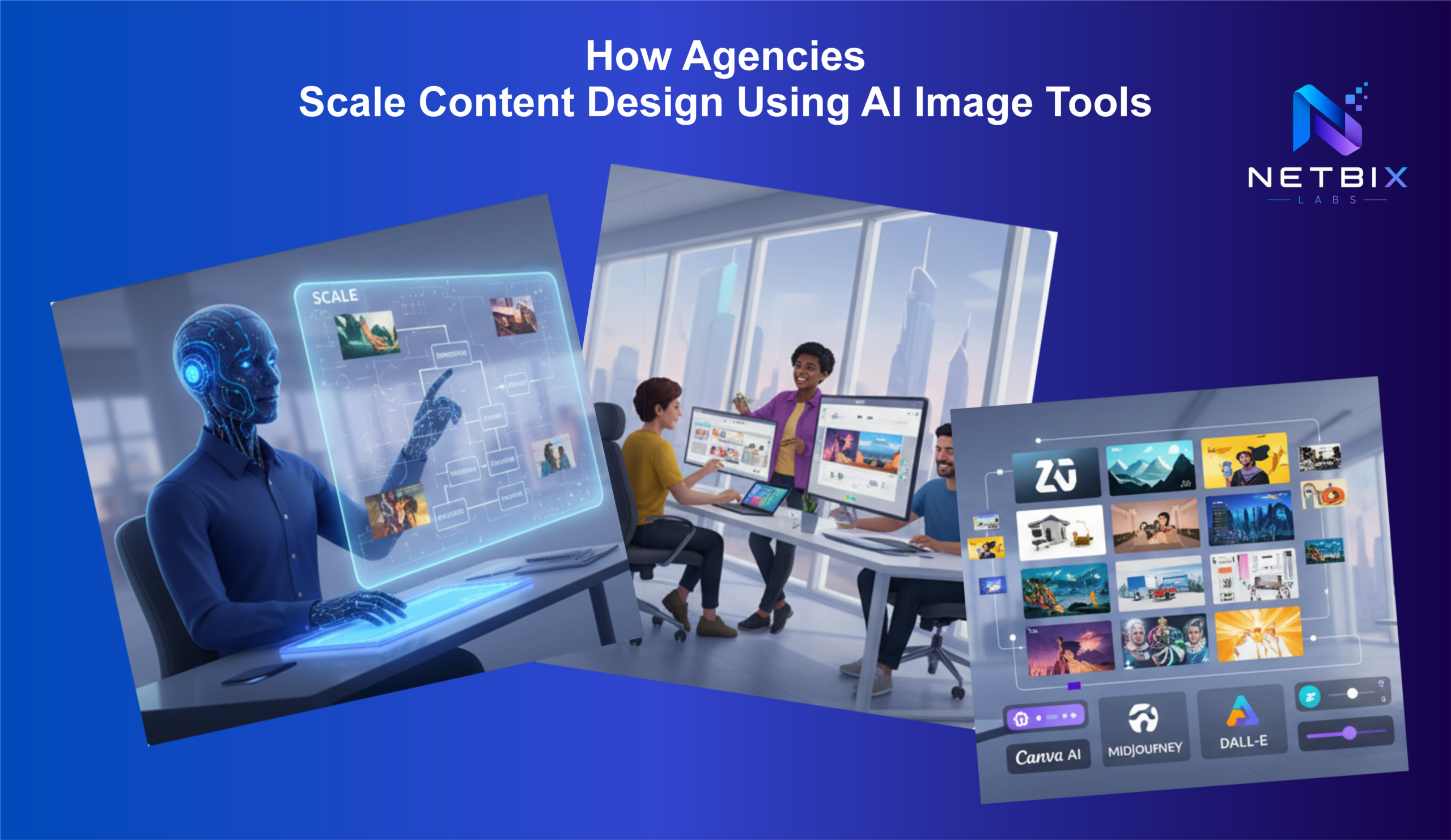
How Agencies Scale Content Design Using AI Image Tools
Discover how agencies use AI content design tools to automate creative workflows,…

AI content design refers to the practice of using artificial intelligence tools and models to plan, create, optimize, and deliver content that meets user needs and business goals. It blends traditional content design principles — user research, information architecture, tone of voice, accessibility, and conversion-focused copy — with AI capabilities such as natural language generation, image and video synthesis, personalization engines, and analytics-driven optimization.
As content volume and personalization expectations grow, businesses need scalable processes that maintain quality and brand consistency. AI content design enables teams to:
Marketers use AI to create multiple ad variations quickly. For example, a team might generate 50 headline variations with ChatGPT or Jasper, then pair them with AI-generated visuals from Canva or Adobe Firefly. Platforms like Phrasee or specialized tools can optimize email subject lines for open rates. For more on ad creative workflows, see related tag ai ad creatives.
AI content design helps write product descriptions, feature pages, and FAQs optimized for search intent. Teams often combine Surfer SEO or MarketMuse with LLMs to produce copy that balances readability and keyword coverage.
Personalization engines powered by AI tailor website copy, recommendations, and CTAs by segment or behavior. Examples include dynamic landing pages that present different headlines, images, or offers depending on user data — an approach that ties closely with AI for Business strategies.
Customer support teams use AI to draft help articles, auto-generate suggested replies, and keep documentation consistent across locales. Tools like Notion AI, combined with agent workflows, can auto-summarize product updates for internal stakeholders. See ai agents automation for how agents streamline these processes.
AI content design covers video scripting, storyboard generation, and automated video production. Platforms like Synthesia or Lumen5 convert blog posts into short videos with AI avatars or motion templates — an increasingly common tactic for social and product marketing. Explore creative capabilities in AI Video.
Here’s a practical workflow example for a product launch page:
AI content design unlocks speed and scale but introduces risks. Key considerations:
Begin with small pilots: automate one repetitive task (e.g., meta descriptions or social captions) and measure impact. Build reusable prompt libraries, style guides, and approval checklists. As maturity grows, connect AI tools with your CMS and analytics to create closed-loop optimization that improves content over time. For automation and agent-driven orchestration explore AI Automation and AI Agents.
To expand your AI content design capabilities, explore related categories like AI Design, AI Productivity, and practical tags such as ai ad creatives, agency ai tools, and ai analytics dashboard.
AI content design is not a replacement for skilled content designers and strategists — it’s an amplifier. By combining AI’s speed, data-driven insights, and creative capabilities with human judgment and governance, businesses can create more relevant, consistent, and measurable content across channels. Start small, measure carefully, and scale workflows that deliver both efficiency and better user experiences.
Discover how agencies use AI content design tools to automate creative workflows,…