Tag: Ai Email Automation

Ai Email Automation

What is AI email automation?

AI email automation combines traditional email automation systems with machine learning and natural language processing to create smarter, more personalized, and more efficient email workflows. Instead of solely relying on rule-based triggers (like “send email X after signup”), AI email automation uses predictive models, content generation, and real-time data to determine who to contact, when to send, what subject lines and copy perform best, and how to route responses.

Why AI email automation matters for businesses

Email remains one of the highest-return channels for marketing, sales, and customer communications. AI email automation amplifies that return by enabling teams to scale personalization, reduce manual work, and continuously optimize messaging based on performance signals. The result is faster lead qualification, higher engagement, improved conversion rates, and more efficient customer support.

  • Scale personalization: Dynamic content and AI-driven copywriting let you send individualized messages at scale.
  • Save time: Automate repetitive outreach, follow-ups, and support replies so teams focus on higher-value tasks.
  • Improve performance: AI optimizes send time, subject lines, and segment selection based on historical and real-time data.
  • Reduce churn & increase LTV: Better onboarding and re-engagement flows keep customers active longer.

Core applications of AI email automation

1. Sales and lead nurturing

AI sequences can qualify leads, personalize outreach with company- and prospect-specific details, and automatically escalate hot leads to human reps. Sales engagement platforms that use AI help prioritize follow-ups and recommend next-best actions.

2. Marketing personalization and lifecycle campaigns

From welcome series to cart abandonment and reactivation campaigns, AI can tailor content and timing to the recipient’s behavior, product preferences, and predicted lifetime value.

3. Customer support and ticket triage

AI classifies incoming emails, suggests answers from knowledge bases, auto-responds to simple inquiries, and routes complex issues to the right agent—greatly reducing response times.

4. Content and subject line generation

NLP models generate subject lines, preheaders, and body copy variants optimized for engagement. This reduces creative bottlenecks and speeds up campaign launches.

5. Deliverability and compliance optimization

Machine learning detects deliverability risks (spam traps, low engagement segments) and recommends list hygiene, sending patterns, and compliance steps to reduce bounces and spam complaints. Always pair these features with strong privacy and consent practices.

Concrete examples and real-world tools

Here are real tools and how companies use them in production:

  • HubSpot: Built-in AI for content suggestions, sequence automation, and predictive lead scoring powers personalized sales cadences and marketing funnels.
  • Mailchimp: Uses AI for creative suggestions, send-time optimization, and audience segmentation—commonly used for e-commerce lifecycle campaigns.
  • ActiveCampaign: Offers machine learning for predictive sending and personalization across email sequences and automations.
  • Klaviyo: Popular with e-commerce teams for predictive product recommendations, dynamic content and AI-driven segmentation based on purchase behavior.
  • Lavender.ai and Flowrite: Tools focused on improving subject lines, email copy, and reply drafting using advanced NLP to increase reply and open rates.
  • SendGrid / Postmark / Mailgun: Transactional email platforms that pair well with AI layers for content generation and delivery analytics.
  • Reply.io and Outreach.io: Sales engagement platforms that use AI to optimize cadences, prioritize prospects, and automate multi-channel follow-ups.
  • Zapier, Make, n8n: Automation platforms that connect email systems to CRM, support tools, and AI models to create end-to-end automated workflows.
  • SaneBox and Superhuman: Use intelligent triage and prioritization to reduce inbox noise for busy professionals.

Example AI email automation workflows

Onboarding flow for a SaaS product

  • Trigger: New signup.
  • AI task: Generate a personalized 5-email onboarding sequence using product usage data and user role.
  • Optimization: AI chooses optimal send times and subject line variants; monitors opens and in-app activity to branch the sequence.
  • Outcome: Faster activation, fewer manual touches by support team.

Sales outreach with AI assistance

  • Trigger: New lead from a paid campaign.
  • AI task: Enrich lead data, generate a tailored outreach template (with contextual lines about the company), and schedule follow-ups.
  • Optimization: AI ranks leads and recommends escalation to a human rep when intent signals are strong.
  • Outcome: Higher reply rates and better conversion of leads to opportunities.

E-commerce cart abandonment recovery

  • Trigger: Abandoned cart after 1 hour and 24 hours.
  • AI task: Insert product recommendations, urgency messaging, and a personalized discount if predicted conversion likelihood is low.
  • Optimization: Multivariate testing of subject lines and send cadence.
  • Outcome: Increased recovered revenue and improved segmentation for future campaigns.

Best practices and governance

  • Combine AI with human oversight: Let AI draft and optimize, but review messages that affect customer relationships or legal obligations.
  • Respect privacy and consent: Use opt-ins, honor unsubscribe requests, and follow data protection laws (GDPR, CCPA). Consider security risks—see AI Security.
  • Continuously test: A/B test subject lines, content, and timing. Monitor deliverability and engagement metrics.
  • Keep data clean: Use validation tools and hygiene services to avoid bounce and spam issues.
  • Document automations: Maintain readable workflows so teams can audit and update AI-driven sequences.

Where AI email automation fits in your AI stack

AI email automation often sits at the intersection of several AI categories. It leverages orchestration and agent-like behavior from AI Agents, benefits from workflow automation in AI Automation, boosts team efficiency in AI Productivity, and should be integrated carefully with business goals found in AI for Business. If you’re building or customizing automations, check resources in AI Builders.

Related tags and resources

Explore deeper topics and practical guides:

Final thoughts

AI email automation is not a magic bullet, but when implemented thoughtfully it becomes a force multiplier for marketing, sales, and support. Start small with a single automated flow, measure precisely, and expand to more sophisticated personalization and agent-driven automations. With proper governance and continuous testing, AI-driven email can significantly improve customer experiences and business outcomes.

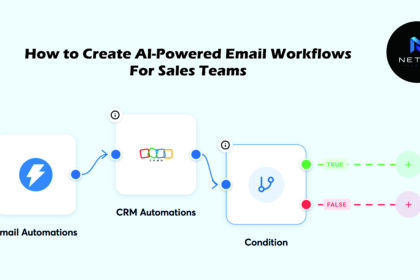
How to Create AI-Powered Email Workflows for Sales Teams

Learn how to build an AI sales automation system that personalizes outreach,…

Iqbal