Tag: Ai Marketing Tools

Ai Marketing Tools

What are AI marketing tools?

AI marketing tools are software platforms and features that apply artificial intelligence, machine learning, natural language processing, computer vision, and predictive analytics to automate, optimize, and scale marketing activities. These tools range from simple content generators and ad-creative optimizers to complex recommendation engines, customer-scoring models, and end-to-end campaign orchestration systems. In short, they help marketers make smarter decisions faster, personalize customer experiences at scale, and measure impact more accurately.

Why AI marketing tools matter

Marketing complexity has exploded across channels, formats, and customer expectations. AI marketing tools are important because they:

  • Enable personalization at scale: deliver tailored messages to millions of users in real time.
  • Reduce manual work: automate repetitive tasks like copywriting, segmentation, and bid management.
  • Improve decision-making: surface insights from large datasets and predict customer behaviors.
  • Boost ROI: optimize media spend, creative testing, and lifecycle marketing using data-driven models.
  • Accelerate creativity: help teams generate concepts, mockups, and videos faster.

Core applications of AI marketing tools

1. Content creation and copywriting

AI-powered content tools generate blog drafts, product descriptions, social captions, and email subject lines. They reduce writer’s block and speed up production while enabling consistent brand voice.

  • Examples: ChatGPT, Jasper.ai, Copy.ai, Writesonic for copy generation.
  • Use case: Generate A/B test variations of email subject lines to increase open rates.

2. Ad creative and campaign optimization

AI analyzes historical ad performance and audiences to recommend creative elements, headlines, and media buys. Tools can automatically create multiple ad variations and optimize delivery in real time.

  • Examples: AdCreative.ai, Google Ads automated bidding, Meta’s Advantage+ campaigns.
  • Use case: Automatically generate dozens of ad creative variations and let the model route budget to top performers.

3. Personalization and recommendation engines

For e-commerce and content platforms, AI marketing tools provide product recommendations, dynamic on-site content, and personalized email flows based on browsing and purchase history.

  • Examples: Salesforce Einstein, Adobe Target, Klaviyo for personalized email flows.
  • Use case: Increase average order value by surfacing individualized product bundles.

4. Customer segmentation and predictive analytics

Machine learning models identify high-value segments, predict churn, and forecast lifetime value (LTV). Marketers can prioritize outreach and tailor offers accordingly.

  • Examples: Optimove, Amplitude with predictive modules, Google Analytics 4 predictive metrics.
  • Use case: Predict next-best-action for users nearing churn and trigger automated retention campaigns.

5. Conversational AI and chatbots

AI-driven chatbots and conversational agents handle customer inquiries, qualify leads, and even complete transactions. They integrate with CRMs and marketing automation platforms to log interactions and trigger follow-up flows.

  • Examples: Drift, Intercom, ManyChat, custom GPT-powered agents.
  • Use case: Qualify leads automatically on site, then hand high-intent prospects to sales teams.

6. Visual and video automation

AI video and design tools speed up production of short-form video, thumbnails, and visual assets by automating editing, subtitles, and style transfer.

  • Examples: Synthesia for AI video avatars, Lumen5 and Vidyo.ai for automated editing, Canva’s AI design features.
  • Use case: Produce platform-optimized short videos from blog posts in minutes to support social distribution.

7. Analytics, attribution, and dashboarding

Advanced AI dashboards help teams attribute conversions across touchpoints, detect anomalies, and forecast trends. These tools bring together data from multiple channels to deliver actionable insights.

  • Examples: Power BI with Azure ML models, Tableau with integrated ML, GA4, and predictive analytics features.
  • Use case: Use AI-driven attribution to reallocate budget from underperforming channels to higher-impact touchpoints.

Concrete tool examples and where they fit

  • HubSpot – inbound marketing automation, predictive lead scoring, and AI content suggestions.
  • Mailchimp / Klaviyo – AI-powered subject line testing, send-time optimization, and segmentation for email marketing.
  • Google Marketing Platform – automated bidding, audience modeling, and creative testing.
  • Adobe Sensei – creative automation and personalization across Adobe Experience Cloud.
  • Persado – data-driven language optimization for email and ad copy using AI-tested linguistic variants.
  • Segment / Twilio – unified customer data for triggering AI-led journeys and messaging.

How to choose and implement AI marketing tools

Selecting the right AI tools requires alignment with business goals, data maturity, and technical constraints. Consider these criteria:

  • Data readiness: Do you have clean, centralized customer data? Tools rely on quality inputs to perform.
  • Integration: Can the tool connect to your CRM, analytics, and ad accounts?
  • Use-case fit: Prioritize tools that solve high-impact problems (e.g., reducing CAC, improving retention).
  • Explainability: Can the tool explain its recommendations for governance and compliance?
  • Security & privacy: Ensure the vendor complies with data protection rules—see our AI Security coverage for best practices.

Start with a small pilot, measure lift with control groups, and scale successful workflows. For automation and orchestration, link AI marketing tools with your broader business processes using platforms described in our AI Automation and AI Agents categories.

Practical use cases by channel

  • Email: Automated lifecycle flows, subject-line optimization, and send-time personalization (Klaviyo, Mailchimp).
  • Search & Social Ads: Automated bidding, creative generation, and audience expansion (Google, Meta, AdCreative.ai).
  • Website & E‑commerce: Real-time product recommendations and dynamic landing pages (Adobe Target, Salesforce).
  • Content & SEO: Topic clustering, content briefs, and on-page optimization (SurferSEO, MarketMuse).
  • Video & Visual: Auto-editing, captioning, and avatar-based content (Synthesia, Lumen5).

Measuring impact and ROI

Measure AI-driven marketing by setting clear KPIs—CAC, LTV, conversion rate, engagement lift, and incremental revenue. Use A/B tests or holdout groups to isolate the impact of AI features. Analytics platforms and dashboards—including those discussed in our AI Productivity and AI for Business sections—help centralize results.

Trends and the future of AI marketing tools

Look for three major trends:

  • Composable marketing stacks: Best-of-breed AI tools integrated via APIs and CDPs instead of monolithic suites.
  • Generative creative at scale: Automated long-form video and personalized creative per user segment.
  • Autonomous campaigns: End-to-end systems that plan, buy, create, and optimize campaigns with minimal human oversight—often leveraging AI Builders and AI Design capabilities.

Related resources and next steps

Explore specialized topics and tools on our site to dive deeper into practical implementations:

AI marketing tools are no longer optional for competitive marketers—when chosen and implemented correctly they deliver measurable improvements in efficiency, personalization, and growth. Start with a prioritized use case, run a small pilot, and scale the models and automations that produce real lift.

Is an AI Marketing Automation Workflow the Only Way to Keep Up With Content Demand?

Marketing teams must produce more content across more channels with fewer resources.An…

NetBix Labs

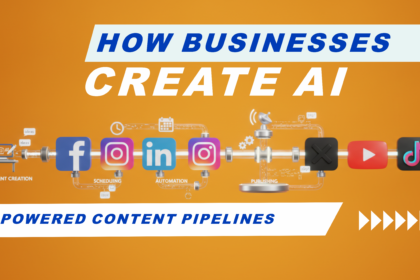
How Businesses Create AI-Powered Content Pipelines

Learn how businesses build AI-powered content pipelines using Buffer — from ideation…

Iqbal