Tag: Ai Note Taking

Ai Note Taking

What is AI note taking?

AI note taking refers to the use of artificial intelligence to capture, organize, summarize, and surface information from conversations, documents, lectures, and other knowledge sources. Instead of manually typing or transcribing everything, AI-powered tools automate transcription, extract key points, identify action items, and provide semantic search capabilities so notes become immediately useful and discoverable.

Why AI note taking matters for businesses

Manual note-taking is time-consuming, inconsistent, and hard to scale. AI note taking transforms notes from passive records into active knowledge assets. Key benefits include:

  • Time savings: Automated transcription and summarization reduce the time spent writing and reviewing notes.
  • Improved accuracy: High-quality speech-to-text and context-aware summarization minimize missed details and human error.
  • Searchability and knowledge retrieval: Semantic search and topic tagging enable teams to find relevant notes quickly.
  • Action-driven outcomes: Extraction of action items, follow-ups, and timelines helps move work forward.
  • Scalability: Teams, departments, and entire organizations can standardize note practices and build centralized knowledge bases.

Core capabilities of AI note taking

  • Transcription: Real-time or post-meeting conversion of audio/video to text with speaker separation.
  • Summarization: Generating concise meeting summaries, bullet-point highlights, and TL;DRs.
  • Action item detection: Identifying tasks, deadlines, and owners mentioned during conversations.
  • Semantic search & tagging: Searching across notes by meaning, not just keywords, and auto-tagging topics.
  • Context linking: Connecting notes to CRM records, project tasks, or knowledge graphs for richer context.
  • Multi-modal understanding: Processing audio, video, images, and documents to create unified notes.

Real-world examples and tools

Several established and emerging platforms demonstrate how AI note taking works in practice:

  • Otter.ai — Automated meeting transcription with speaker identification, searchable transcripts, and summary highlights. Popular for team meetings and interviews.
  • Notion AI — Built into Notion’s workspace, used to summarize documents, generate meeting notes, and create follow-up tasks that sync with project pages.
  • Microsoft Loop / Copilot in Microsoft 365 — Integrates AI summarization and context-aware note generation with Outlook and Teams, linking notes to email threads and calendar events.
  • Fireflies.ai and Fathom — Meeting intelligence tools that record calls, extract action items, create highlights, and integrate with CRMs like Salesforce or HubSpot.
  • Mem.ai — Personal knowledge management with automatic capture from meetings and documents, plus powerful AI-assisted search and linking.
  • Grain — Creates short highlight clips and text summaries from Zoom calls, useful for sharing concise insights with teams or stakeholders.

Use case: Sales and CRM

AI note taking automatically captures sales call summaries and action items, then syncs them to CRM systems (e.g., Salesforce). This reduces data-entry burden, improves pipeline accuracy, and ensures handoffs between SDRs and account executives include all context.

Use case: Product and engineering

Product teams use AI notes to extract feature requests, bug descriptions, and prioritization decisions from cross-functional meetings. Integrations with project management tools create tasks from identified action items automatically.

Use case: Legal and compliance

Legal teams leverage accurate transcripts and searchable notes for audits, contract reviews, and compliance checks. When paired with secure data handling and access controls, AI note taking speeds due diligence and reduces risk.

How AI note taking integrates across AI domains

AI note taking doesn’t exist in isolation—it’s often part of broader AI systems in companies:

  • As part of AI Productivity, notes enhance individual and team efficiency by surfacing context at the moment of need.
  • In combination with AI Automation, note systems can trigger workflows—creating tasks, sending follow-ups, or updating CRMs automatically.
  • When paired with AI for Business solutions, notes become structured inputs for analytics, forecasting, and knowledge management.
  • Given the privacy and access concerns around capturing conversations, integrations with AI Security best practices (encryption, access controls, retention policies) are essential.
  • AI note taking also overlaps with AI Agents, where autonomous assistants might attend meetings, summarize outcomes, and execute follow-ups as part of an agent workflow.

Examples of related workflows and tags

If you’re exploring how AI note taking fits into automated agents or business processes, see related tags for deeper guidance:

  • ai agents automation — how agents automate note capture and follow-up tasks.
  • ai agents workflow — common workflows where agents attend meetings, summarize, and trigger actions.
  • ai agents business — business-focused agent use cases that incorporate note taking into broader processes.

Best practices for adopting AI note taking

  • Define clear use cases: Start with specific scenarios (sales calls, standups, client meetings) to measure ROI.
  • Address privacy and compliance: Obtain consent, set retention policies, and use encryption—see AI Security guidance.
  • Integrate with existing systems: Connect notes to CRM, project management, and knowledge bases so captured context is actionable.
  • Train teams on quality checks: AI can misinterpret or hallucinate—build quick review steps for critical note types.
  • Standardize templates: Use templated summaries and tagging to ensure notes are consistent and useful across teams.

Challenges and limitations

AI note taking offers substantial advantages but comes with challenges:

  • Accuracy: Speech recognition errors and summarization mistakes require human review for mission-critical content.
  • Security & privacy: Recording conversations raises legal and ethical concerns unless managed appropriately.
  • Context loss: Nuance and tone sometimes get lost in automated summaries; preserve raw transcripts when needed.
  • Vendor lock-in: Choose tools that support open export formats so knowledge remains portable.

Conclusion: The future of note taking

AI note taking is evolving from a convenience to a core business capability. As AI models improve, notes will become more actionable: auto-generated agendas, real-time insights, and integrated decision-support tied into broader AI Automation and AI for Business strategies. For teams, the focus should be on selecting tools that balance accuracy, security, and integration, and on designing workflows that make notes a living part of how work gets done.

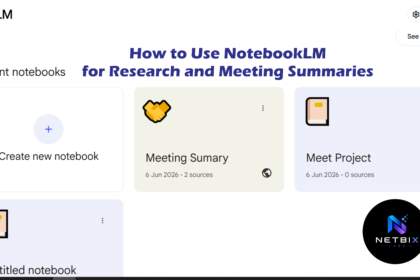
How to Use NotebookLM for Research and Meeting Summaries

Learn how to use NotebookLM as an AI research assistant and meeting…

Iqbal