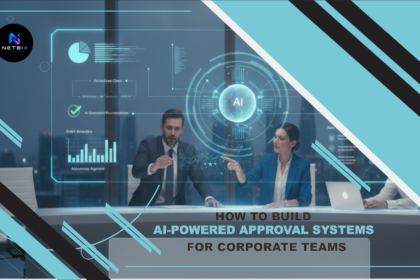
How to Build AI-Powered Approval Systems for Corporate Teams
Learn how to build an AI approval workflow for your team. A…

Corporate AI systems refer to integrated software platforms, services, and operational frameworks that apply artificial intelligence at scale across a company. These systems combine machine learning models, data pipelines, automation tools, orchestration layers, and governance to support business processes such as customer service, fraud detection, sales forecasting, supply chain optimization, and employee productivity.
Unlike single-purpose AI apps, corporate AI systems are built for enterprise requirements: reliability, security, compliance, integration with legacy IT, and measurable ROI. They can include pre-built SaaS offerings (e.g., Salesforce Einstein), MLOps platforms (e.g., Databricks, MLflow), and automation stacks (e.g., UiPath) that together deliver end-to-end AI capabilities.
Organizations invest in corporate AI systems because they convert data into repeatable, scalable business outcomes. Key benefits include:
Corporate AI systems power a wide range of enterprise applications. Representative use cases include:
Here are real-world tools commonly used in corporate AI stacks:
Successfully deploying corporate AI systems requires alignment across people, processes, and technology:
Enterprises face several obstacles when building corporate AI systems:
– A retail chain uses Vertex AI and a Snowflake data warehouse to build demand forecasting models that automatically update replenishment orders, reducing stockouts and inventory costs.
– A bank deploys an integrated stack with Databricks, DataRobot, and its fraud detection pipeline to identify suspicious transactions in real time and route cases to human investigators.
– A manufacturing company pairs IoT sensors with AWS SageMaker and predictive maintenance models to schedule repairs before failures, lowering downtime by a measurable percentage.
For organizations exploring corporate AI systems, relevant topics include automation, agent-driven workflows, and security. See related categories:
Corporate AI systems are not a single product but a composable architecture that combines data, models, automation, and governance to deliver business value. Start small, measure impact, and expand by integrating proven platforms (cloud AI, MLOps, RPA) while maintaining strong governance and security. For tactical guides on building agent-driven workflows or automating processes at scale, explore the linked categories and tags above to find tutorials, platform comparisons, and case studies.
Tip: Map each AI initiative to specific KPIs (cost savings, revenue lift, time saved) and include monitoring from day one to ensure your corporate AI systems remain reliable and compliant as they scale.
Learn how to build an AI approval workflow for your team. A…