Tag: Email Marketing AI

Email Marketing AI

What is “Email Marketing AI”?

Email marketing AI refers to the set of artificial intelligence technologies and machine learning models applied to design, optimize, automate, and analyze email campaigns. Rather than treating email campaigns as one-size-fits-all broadcasts, AI enables dynamic personalization, predictive targeting, content generation, send-time optimization, and actionable analytics. The result is more relevant messages, higher engagement, and better ROI from email channels.

Why Email Marketing AI Matters

In a crowded inbox, relevance and timing determine whether an email converts or gets deleted. AI transforms traditional email marketing by:

  • Improving personalization at scale — tailoring content to individual behaviors and preferences.
  • Boosting efficiency — automating content creation, audience segmentation, and campaign workflows.
  • Optimizing performance — using predictive analytics and continuous learning to raise open rates and conversions.
  • Reducing waste — proactively cleaning lists, reducing churn, and focusing budget on high-value prospects.

Core Applications of Email Marketing AI

1. Personalized Content and Dynamic Content Blocks

AI can select and assemble content blocks for each recipient based on purchase history, browsing behavior, and predicted intent. This goes beyond merge tags: AI can recommend products, choose hero images, or swap calls-to-action to match the user’s profile.

2. Subject Line & Copy Optimization

Natural language models power subject line and body copy generation. Tools can suggest variants, predict expected open rates, and automatically test high-performing variants to maximize engagement.

3. Send-Time and Frequency Optimization

Machine learning models analyze when individual recipients are most likely to open and engage, automatically scheduling emails at optimal moments and spacing messages to prevent fatigue.

4. Predictive Segmentation & Scoring

AI creates behavioral segments and scores leads for purchase probability, churn risk, or upsell potential—enabling targeted nurturing sequences and smarter resource allocation.

5. Automated Workflows & Agents

AI-driven agents and automation platforms can orchestrate multi-step campaigns, react to real-time events (cart abandonment, subscription milestones), and trigger cross-channel journeys. For workflow-level automation, see resources in AI Automation and AI Agents.

Concrete Examples & Real-World Tools

Below are real tools and specific use cases where email marketing AI is already driving measurable impact:

  • Klaviyo — Widely used by ecommerce teams for predictive analytics (lifetime value prediction, product recommendations) and automated flows driven by customer events.
  • Mailchimp — Includes AI-assisted subject lines, send-time optimization, and content suggestions for small-to-medium businesses.
  • HubSpot — Combines predictive lead scoring with automated nurturing workflows and AI content tools integrated into the CRM.
  • ActiveCampaign — Focuses on predictive sending, conditional content, and automation maps that react to user behavior.
  • Phrasee & Persado — Specialized in AI-powered subject line and messaging optimization using language models trained on marketing outcomes.
  • Seventh Sense — Optimizes email delivery timing and frequency to maximize engagement across audiences.
  • OpenAI / GPT-based tools (ChatGPT, Jasper) — Used by marketers to generate email copy, personalization templates, and A/B variants quickly.

Use Cases by Business Function

Ecommerce

Automated product recommendations, abandoned cart recovery with AI-optimized timing and messaging, and lifecycle campaigns targeted by predicted purchase propensity.

SaaS

Onboarding sequences that adapt to user behavior, churn-prediction triggers for retention campaigns, and upgrade offers tuned to usage patterns.

Agencies & Marketing Teams

Agencies leverage AI to scale content creation, fine-tune ad-to-email creative consistency, and report on cross-channel performance. See related tools for agencies in agency ai tools and learn how AI helps sync ad creatives via ai ad creatives.

How to Implement Email Marketing AI

  • Audit your data — Ensure CRM, ecommerce, and behavioral data are clean and integrated. AI’s accuracy depends on data quality.
  • Start with low-friction wins — Implement subject line optimization, send-time personalization, and basic predictive segmentation.
  • Use automation wisely — Map workflows and add AI-driven decision steps (e.g., choose next message based on engagement). For automation and agent-driven flows, explore ai agents automation.
  • Test and measure — Run controlled A/B tests and monitor metrics beyond opens—like conversion rates and revenue per recipient.

Benefits and ROI

Companies implementing AI in email typically report improved open rates, higher click-through and conversion rates, and more efficient campaign management. AI reduces manual effort for copywriting and segmentation, allowing teams to focus on strategy while models handle repetitive optimizations.

Best Practices & Pitfalls to Avoid

  • Guard privacy and compliance — Make sure AI-driven personalization respects consent and privacy laws (GDPR, CAN-SPAM).
  • Maintain brand voice — Use AI-generated copy as a starting point and always review for brand consistency and factual accuracy.
  • Don’t over-automate — Balance automation with human oversight to prevent inappropriate or irrelevant messaging.
  • Monitor model drift — Periodically retrain or re-evaluate models to ensure predictions remain accurate as behavior changes.

Future Trends in Email Marketing AI

Expect deeper integration with generative models for hyper-personalized creative, tighter real-time orchestration across email and other channels, and more autonomous agents that can run entire campaigns end-to-end. For builders and designers creating AI-driven email systems, see AI Builders and AI Design.

Related Resources

Explore these related categories and tags to expand your knowledge and find tools tailored to your use case:

  • AI for Business — Strategic insights on adopting AI across functions including marketing.
  • AI Productivity — Tools and workflows to boost team output when using AI for email campaigns.
  • AI Security — Guidance on securing data and maintaining compliance when using AI.
  • ai analytics dashboard — Analytics tools and dashboards that surface AI-driven email insights.
  • agency ai tools — Tools popular with agencies for scaling client email programs.
  • ai ad creatives — Creative AI that complements email campaigns with ads and landing pages.
  • ai agents automation — Autonomous agents and automation patterns for orchestrating email journeys.

Summary: Email marketing AI is not just a set of tools—it’s an evolution in how marketers create, target, and optimize email communications. By combining predictive analytics, generative content, and intelligent automation, businesses can deliver more relevant messages, improve customer experience, and increase marketing ROI.

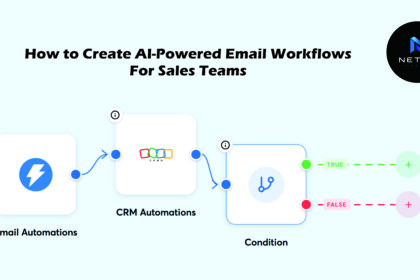
How to Create AI-Powered Email Workflows for Sales Teams

Learn how to build an AI sales automation system that personalizes outreach,…

Iqbal