Tag: Notebooklm Tutorial

Notebooklm Tutorial

What does “notebooklm tutorial” mean?

A notebooklm tutorial is a how-to guide that teaches users how to use NotebookLM (Google’s document-aware generative AI notebook) effectively. These tutorials cover setup, content import, prompt design, advanced querying, citation checking, and integrating NotebookLM into business workflows. A good tutorial transforms NotebookLM from a curiosity into a reliable productivity tool for research, learning, customer support, and knowledge management.

Why “notebooklm tutorial” matters

As AI systems move from chat boxes to context-rich assistants, NotebookLM-style tools become central to knowledge work. A practical notebooklm tutorial helps teams reduce search time, improve answer accuracy, and scale institutional knowledge. For businesses, learning to use NotebookLM means:

  • Faster onboarding: New employees can query an internal knowledge base compiled in NotebookLM instead of reading dozens of documents.
  • Better decision support: Executives and analysts get summarized insights from company reports, contracts, and data sheets.
  • More consistent customer responses: Support and sales scripts built into notebooks deliver reliable answers across teams.

Core applications and use cases

NotebookLM tutorials typically demonstrate the breadth of applications. Here are common, real-world use cases:

  • Research summaries: Upload academic papers, market research PDFs, and slide decks; then ask NotebookLM to summarize findings, extract methodologies, or compare results across documents.
  • Legal and compliance review: Use NotebookLM to highlight clauses, summarize contract risks, and produce short briefs for legal teams.
  • Sales enablement: Build a product-playbook notebook that sales reps query for objection handling, feature comparisons, and pricing rationale.
  • Customer support knowledge base: Consolidate manuals and ticket histories so agents can retrieve step-by-step resolutions quickly.
  • Code and technical docs: Feed design docs and code snippets to NotebookLM for inline explanations, refactor suggestions, and dependency mapping.

Concrete examples of notebooklm tutorial content

  • Beginner tutorial: Step-by-step guide to create a notebook, import Google Drive files, perform your first queries, and export notes. Example prompt: “Summarize the key action items across these three project plans.”
  • Advanced prompt engineering: Templates for follow-up questions, chain-of-thought prompts, and multi-document synthesis. Example prompt chain: “List all product features mentioned. Now prioritize them by customer impact.”
  • Integration tutorial: How to connect NotebookLM outputs into workflows using Google Workspace, Zapier, or internal APIs so answers can populate CRM notes or ticketing systems.
  • Compliance and privacy guide: Best practices for handling PII, limiting document access, and auditing NotebookLM responses against source documents.

Step-by-step mini tutorial (what a typical “notebooklm tutorial” covers)

Below is a condensed sequence most NotebookLM tutorials explain:

  • 1. Setup and permissions: Sign in with a Google account, grant access to Drive files you want to include, and create a new notebook.
  • 2. Import content: Upload PDFs, slides, docs, and text files. Organize by folders, tags, or projects.
  • 3. Ask your first question: Try simple queries like “What are the top three conclusions in this report?” and review how NotebookLM cites sources.
  • 4. Refine with follow-ups: Use targeted prompts to drill down—ask for timelines, stakeholders, or risks.
  • 5. Export and integrations: Export summaries to Docs, share notebooks with team members, or pipe insights into project management tools.
  • 6. Monitor and verify: Check answers against original files; create a verification checklist to ensure accuracy.

Best practices and tips included in effective tutorials

  • Curate high-quality sources: The better the input data, the more reliable the outputs—avoid low-quality scraped content.
  • Use clear prompts: Ask with structure (e.g., “Summarize in three bullet points, include citations”).
  • Break complex tasks into steps: Chain prompts to synthesize multi-document insights rather than asking one huge question.
  • Maintain provenance: Always capture which documents support an answer; NotebookLM and similar tools usually display source citations—use them.
  • Set access controls: Limit who can view or edit notebooks when working with confidential material.

Tools and platforms related to NotebookLM tutorials

NotebookLM sits in an ecosystem of AI productivity tools. Tutorials often compare or integrate it with:

  • Google Workspace (Docs, Drive, Slides) — for seamless file import and sharing
  • Other AI assistants like ChatGPT (with file upload), Claude, and Microsoft Copilot — for comparative workflows
  • Knowledge platforms such as Notion AI and Obsidian — to show how static notes complement NotebookLM’s dynamic answering

Advanced use cases and integrations

Experienced teams use NotebookLM in conjunction with AI pipelines. Examples include:

  • Automated research pipelines: Periodically pull new industry reports into a notebook and trigger an update summary for the leadership team.
  • Customer success playbooks: Feed product changelogs and support histories so NotebookLM suggests fixes and escalation paths during live calls.
  • R&D synthesis: Combine technical papers, lab notes, and patents to generate literature reviews and gap analyses.

Troubleshooting and limitations covered in tutorials

Good notebooklm tutorial content also teaches limitations: model hallucinations, incomplete citations, or struggles with highly specialized jargon. Tutorials advise verification steps and fallback processes (human review, cross-checking with original docs).

Related learning resources and next steps

To deepen skills, explore adjacent topics and tutorials. For practical guidance on building AI workflows that include NotebookLM, see our related categories on AI Agents, AI Automation, and AI Builders. Additional tag-based guides you may find useful include Google NotebookLM, ai agents tutorial, and explorations of other Google AI products like Google Veo 3 tutorial.

Final recommendations

Start with a focused notebook (one project or team) and iterate. Use a notebooklm tutorial to ramp up—learn import/export mechanics, practice prompt templates, and build internal templates for recurring tasks. With the right approach, NotebookLM can become the single source of truth that accelerates research, improves customer outcomes, and reduces repetitive work across your organization.

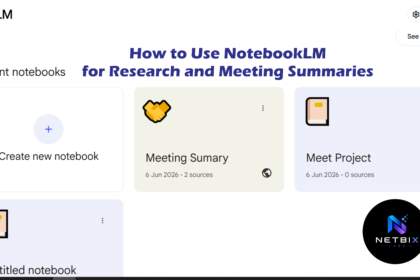
How to Use NotebookLM for Research and Meeting Summaries

Learn how to use NotebookLM as an AI research assistant and meeting…

Iqbal