Tag: Sales AI Workflows

Sales AI Workflows

What are Sales AI Workflows?

Sales AI workflows are automated, repeatable sequences of tasks that combine artificial intelligence (AI) tools with business systems—CRM, email, chat, analytics—to accelerate revenue generation, improve lead qualification, and personalize buyer interactions. Rather than one-off AI features, a sales AI workflow strings together data enrichment, predictive scoring, outreach personalization, scheduling, and post-meeting analysis into a coordinated pipeline that reduces manual work and increases conversion rates.

Why Sales AI Workflows Matter

In modern sales organizations, velocity and personalization win. Sales AI workflows drive both by:

  • Scaling personalization: AI generates personalized messages and content at scale, so reps can reach more prospects with tailored outreach.
  • Improving efficiency: Automation removes repetitive tasks—data entry, follow-ups, meeting scheduling—freeing reps for high-value selling activities.
  • Raising conversion rates: Predictive lead scoring and intent signals help prioritize prospects most likely to buy.
  • Enabling data-driven coaching: Conversation intelligence tools provide insights for better coaching and pipeline management.

Core Components of a Sales AI Workflow

Most effective sales AI workflows combine several components. Typical elements include:

  • Data capture: Website forms, chatbots (e.g., Drift, Intercom), lead lists, inbound inquiries.
  • Enrichment: Add firmographic and technographic data via Clearbit, ZoomInfo, or Apollo.
  • Scoring & routing: Use predictive models to score leads and route them to the right rep or nurture stream.
  • Personalized outreach: AI-written email subject lines and bodies from tools like HubSpot AI, Lavender, or OpenAI-powered templates.
  • Scheduling and conversion: Conversational AI (Conversica) or calendar automation for demos and meetings.
  • Conversation intelligence: Recordings and analysis with Gong or Chorus for insights and pipeline forecasting.
  • Feedback loops: Update CRM, retrain models, and adjust sequences based on outcomes.

Practical Applications and Use Cases

Sales AI workflows can be applied across the funnel. Here are concrete examples you can implement today.

Example 1 — Lead Capture to Close (Full-Funnel Workflow)

  • Visitor fills out a form or engages a chatbot on your site (Drift/Intercom).
  • Workflow triggers enrichment via ZoomInfo/Clearbit and checks intent signals (web activity, content downloads).
  • AI model scores the lead; high scores route immediately to an AE, mid scores go into an SDR nurture sequence.
  • AI generates a personalized outreach email and follow-up sequence (HubSpot AI, Lavender).
  • Prospect schedules a demo via calendar automation; meeting notes and call recording sent to Gong/Chorus for analysis.
  • Outcome updates CRM (Salesforce, HubSpot) and retrains the scoring model for improved future predictions.

Example 2 — Outbound Prospecting Workflow

  • Sales operations engineers identify target accounts using intent data (Bombora) and contact lists (Apollo).
  • AI crafts a sequence of personalized multi-channel touches: email, LinkedIn, phone scripts generated from buyer persona analysis.
  • Responses are analyzed by NLP tools to classify interest and sentiment; interested prospects are routed to reps or an AI agent for booking.
  • Auto-A/B testing adjusts messaging based on open and reply rates—optimizing subject lines and call-to-action.

Example 3 — Conversation Intelligence + Coaching

  • All sales calls are recorded and transcribed using Gong or Chorus.
  • AI identifies objection patterns, competitive mentions, and next-step commitments.
  • Managers receive automated coaching briefs and suggested scripts to improve win rates.
  • Insights feed back into email templates and outreach sequences to align messaging with real buyer language.

Real-World Tools and Platforms

A robust sales AI workflow leverages a mix of specialized platforms and general-purpose AI tools. Examples include:

  • CRM & sales platforms: Salesforce Einstein, HubSpot Sales Hub—offer built-in AI for scoring and content suggestions.
  • Conversation intelligence: Gong, Chorus—analyze sales conversations to surface coaching opportunities and trends.
  • Conversational AI & chat: Drift, Intercom, Conversica—automate lead qualification and meeting scheduling.
  • Enrichment & intent: ZoomInfo, Clearbit, Bombora, Apollo—improve targeting and segmentation.
  • Workflow automation: Zapier, Make (Integromat), Microsoft Power Automate—connect tools and orchestrate sequences.
  • LLM & builders: OpenAI (ChatGPT), Anthropic Claude, LangChain for custom AI agents and prompts that power personalization at scale.

Measuring Success: KPIs to Track

To evaluate your sales AI workflows, monitor key metrics such as:

  • Lead-to-opportunity conversion rate
  • Time-to-first-contact
  • Response and reply rates for outreach sequences
  • Meeting-to-close ratio
  • Average deal size and sales velocity
  • Model accuracy and uplift in predictive scoring

Best Practices and Adoption Tips

Implementing sales AI workflows successfully requires both technology and change management:

  • Start small: Pilot one workflow—like lead scoring + routing—before scaling to the full funnel.
  • Focus on data quality: Enrichment and clean CRM records are essential for reliable AI predictions.
  • Establish feedback loops: Use outcomes to retrain models and improve templates.
  • Keep humans in the loop: AI should augment sales reps, not replace judgment for complex deals.
  • Secure and govern: Ensure data privacy and alignment with security policies; see guidance in AI Security.

Where Sales AI Workflows Fit in the AI Ecosystem

Sales AI workflows intersect with several broader AI capabilities. Explore related topics to deepen your implementation strategy:

Related Tags and Further Reading

For practical examples and tutorials, check related tag pages:

Final Thoughts

Sales AI workflows are not a single product—they are a mindset and architecture for combining data, AI models, and automation to create consistent, scalable selling motion. Organizations that design thoughtful workflows, measure rigorously, and iterate quickly will see higher productivity, faster pipeline velocity, and more predictable revenue. To get started, identify the highest-impact bottleneck in your funnel and prototype a simple AI-powered workflow that integrates with your CRM and communication tools.

Want to dive deeper? Browse related categories like AI Builders, AI Design, and AI Video to explore adjacent technologies that can enrich your sales AI workflows.

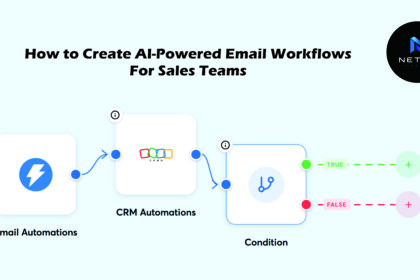
How to Create AI-Powered Email Workflows for Sales Teams

Learn how to build an AI sales automation system that personalizes outreach,…

Iqbal