
Your company’s internal data is at risk every time someone uses AI tools the wrong way — shared accounts, unverified subscriptions, and zero compliance checks. This guide breaks down exactly how to secure your AI usage from the inside out, so your team can work smarter without exposing sensitive information.
Learn how to protect your company’s internal data when using AI tools — avoid shared accounts, subscribe the right way, and stay compliant. Practical guide for businesses.
Introduction
A small marketing agency in North America was using what appeared to be a discounted ChatGPT account purchased from a local reseller for a fraction of the official price. The team pasted client briefs, campaign strategies, and contact lists into it daily without a second thought.
What they didn’t know was that the account was a shared workspace — one seat split among dozens of paying users through an unauthorized reseller. Every prompt they sent, every client detail they typed, every internal strategy they wrote was visible to the account owner and potentially to every other user sharing that same session history.
This is not an isolated story. Across North America and other regions where international payment methods create barriers to direct subscriptions, the market for resold, shared, and unofficial AI accounts is enormous. Businesses buy these accounts because they’re cheaper. They use them because they seem to work. And they expose their most sensitive internal data in the process — without ever realizing it.
The only way to genuinely protect internal data while using AI tools is to subscribe directly to official platforms, using official channels, on plans that contractually protect your data. This guide explains exactly why that matters, what the risks of unofficial accounts look like in practice, and how to subscribe correctly to the three most widely used AI platforms — ChatGPT, Claude, and Google Gemini.
Quick Summary
- Shared and resold AI accounts — common in regions with payment barriers — expose your internal data to account owners, other users, and unauthorized third parties.
- AI data privacy is only guaranteed when you subscribe directly through official platforms on business or paid individual plans.
- Free and Plus tier data on ChatGPT may be used for model training by default. Business and Enterprise customers receive data-not-for-training guarantees.
- Claude’s paid tiers do not train on your data by default — Team and Enterprise plans are contractually protected.
- This guide covers how to subscribe correctly to ChatGPT, Claude, and Google Gemini — with step-by-step instructions for each platform.
Table of Contents
- What You’ll Learn
- The Hidden Risk of Shared and Resold AI Accounts
- Why Official Subscriptions Are the Only Safe Option
- Platform Overview: ChatGPT, Claude, and Google Gemini
- Step-by-Step: How to Subscribe to Each Platform Correctly
- Video Tutorial
- How Businesses Use These Platforms Safely
- Best Practices
- Common Mistakes to Avoid
- FAQ
- Key Takeaways
- Conclusion
What You’ll Learn
- How shared and resold AI accounts expose your business data without your knowledge
- Why the price difference between an unofficial account and an official plan is never worth the risk
- Which data protections are included in official paid plans — and which are not
- Exactly how to subscribe directly to ChatGPT, Claude, and Google Gemini
- How to verify that your subscription is official and your data is protected
- What businesses across different industries do to ensure safe AI tool usage
The Hidden Risk of Shared and Resold AI Accounts
Understanding this risk requires understanding how AI accounts and shared workspaces actually work — because the danger is less obvious than it might initially appear.
You might also like: How Corporate Teams Build AI Workflows for Daily Operations
Related guide: How to Build Secure AI Workflows for Corporate Teams
How Resold AI Accounts Work
Resellers typically operate in one of three ways:
Shared account model: One reseller purchases a single paid subscription and shares the login credentials with multiple paying customers. Every user logs into the same account. Every conversation, every file uploaded, every prompt sent exists within the same account history — visible to anyone else who logs in with the same credentials.
Workspace sharing model: For team plans that allow multiple users, resellers add paying customers as members of their workspace. The workspace owner — the reseller — has full administrative access to every conversation, file, and prompt from every member of that workspace.
Unofficial API access model: Some resellers build custom interfaces that route user prompts through their own API key. Every request passes through their server before reaching the AI platform. The reseller can log, store, or inspect every prompt before it’s processed.
In all three models, the user believes they’re having a private session with an AI tool. In reality, their data is passing through or visible to a third party they have no legal agreement with and no transparency into.
What Data Gets Exposed
The content employees paste into AI tools is far more sensitive than most businesses realize until something goes wrong:
- Client names, contact details, and account information shared in briefing documents
- Financial projections, revenue figures, and budget details included in analysis prompts
- Unreleased product roadmaps and internal strategy documents used as context for AI tasks
- Employee information, HR queries, and performance data processed through AI writing tools
- Legal document drafts and contract terms pasted for AI review or summarization
- Login credentials or API keys accidentally included in technical prompts
Research shows that 22% of files and 4.37% of prompts shared with AI tools contain sensitive information — including source code, access credentials, customer records, and internal financial data. Roughly 15% of employees have pasted sensitive code, PII, or financials into public LLMs.
In a shared or resold account, this data reaches parties it was never intended for. In an official, properly configured business account, it stays within a contractually protected environment.
The Warning Signs of an Unofficial Account
If someone is offering you access to ChatGPT Plus, Claude Pro, or Gemini Advanced at significantly below the official price — especially if payment is through informal channels like WhatsApp transfer, local bank transfer, or payment apps rather than a direct official website — the account is almost certainly shared, resold, or unofficial.
Common warning signs:
- Price significantly below official rates (official ChatGPT Plus is $20/month — anything substantially cheaper via a third party is a red flag)
- Payment requested through informal channels rather than the official website
- You receive login credentials rather than creating your own account
- You’re added to a workspace you didn’t create and don’t control
- The seller cannot clearly explain where the account comes from
Why Official Subscriptions Are the Only Safe Option
Official subscriptions come with contractual data protections that unofficial accounts simply cannot offer — regardless of what the reseller claims.
Data training policies: Tools like Claude (enterprise plans) and ChatGPT Team/ChatGPT Enterprise do not use your prompts to train their models. They also keep company data separate and give admins control over usage. These guarantees exist only on official paid plans — not on free plans, and not on resold accounts regardless of their tier.
Session isolation: On official plans, your conversations are isolated to your account. Other users cannot access your session history, files, or prompt content.
Admin controls: Business plans give designated administrators visibility into usage, the ability to set permissions, and control over who can access the account — none of which exists in a shared reseller account where the reseller holds all administrative access.
Legal accountability: When you subscribe directly to an official platform, your data handling is governed by that platform’s terms of service and privacy policy — legal documents you can read, rely on, and hold the platform accountable to. With a reseller, you have no legal agreement about data handling whatsoever.
Compliance: For businesses in regulated industries or operating under GDPR, PDPA, or other data protection regulations, using an unofficial shared account to process personal or sensitive data may constitute a compliance violation — with consequences that far exceed the money saved on the subscription.
Platform Overview: ChatGPT, Claude, and Google Gemini
ChatGPT by OpenAI
ChatGPT is the most widely used AI tool in business contexts globally. OpenAI offers multiple subscription tiers, with meaningfully different data protections at each level.
Plans available:
- ChatGPT Plus is a subscription plan that provides enhanced access to the ChatGPT web app for $20/month.
- ChatGPT Business: $30/user/month billed monthly, $25/user/month billed annually — designed for teams with data privacy requirements
- ChatGPT Enterprise: custom pricing — maximum data protection, zero data retention, SOC 2 compliance
Critical data protection note: ChatGPT processes your inputs on OpenAI’s servers. Free and Plus tier data may be used for model training by default. Business and Enterprise customers receive data-not-for-training guarantees.
For businesses handling any sensitive data, ChatGPT Business or Enterprise is the appropriate plan — not Plus.
Official Website: https://chatgpt.com Official Pricing: https://chatgpt.com/pricing
Claude by Anthropic
Claude is developed by Anthropic and is widely considered one of the strongest AI tools for document analysis, writing, and complex reasoning tasks. Its data protection policies are among the clearest in the industry.
Plans available:
- Free plan: no credit card required, covers web, iOS, Android, and desktop access — subject to daily usage limits.
- Pro: $20/month — adds Claude Code, file creation and code execution, unlimited projects, and Google Workspace integration.
- Team Standard: $25/seat/month billed monthly, $20/seat/month billed annually — requires minimum 5 seats.
- Enterprise: $20/seat/month plus API usage — for organizations with governance and compliance requirements
Critical data protection note: Paid tiers do not train on your data by default. Team and Enterprise are contractually protected. Consumer tiers (Free, Pro, Max) require explicit opt-in as of August 28, 2025.
Official Website: https://claude.ai Official Pricing: https://claude.com/pricing
Google Gemini
Google Gemini (formerly Bard) is Google’s AI assistant, deeply integrated with Google Workspace. For businesses already operating on Google Workspace, Gemini offers the most seamless integration with existing tools — Gmail, Docs, Sheets, Drive, and Meet.
Plans available:
- Gemini (free): available to all Google account holders with usage limits
- Gemini Advanced: included in Google One AI Premium plan at $19.99/month
- Gemini for Google Workspace: included in Google Workspace Business and Enterprise plans — the appropriate choice for business use
Critical data protection note: For business use, Gemini within a Google Workspace plan provides enterprise-grade data protection — your data is not used to train Google’s public AI models. Personal Google accounts using the free Gemini product do not carry these guarantees.
Official Website: https://gemini.google.com Official Workspace Pricing: https://workspace.google.com/pricing
Step-by-Step: How to Subscribe to Each Platform Correctly
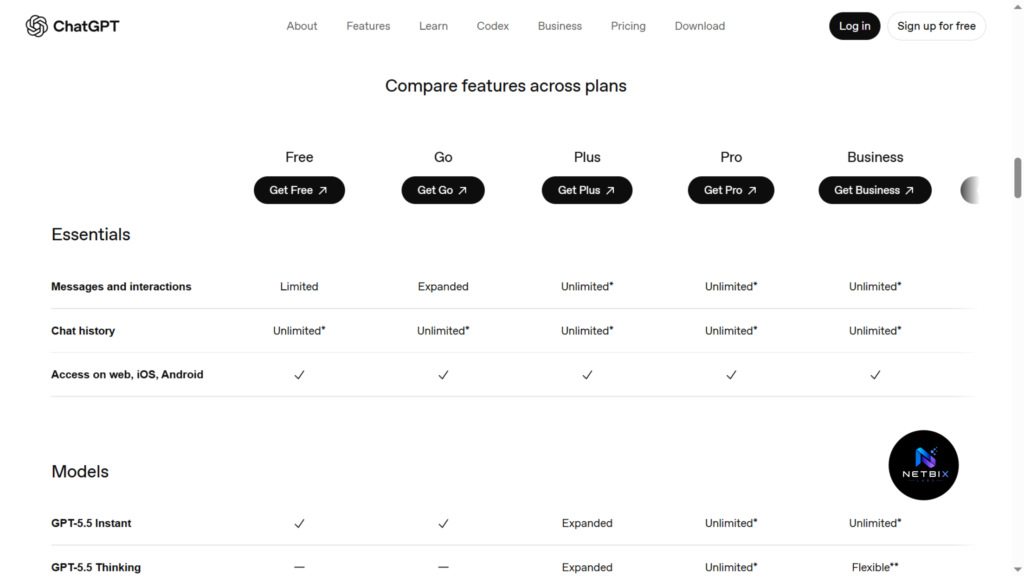
Step 1: Subscribe to ChatGPT — Official Process
Why it matters: OpenAI has a direct subscription process through its official website. Any subscription not completed through this process is unofficial — regardless of what the seller claims.
What to do:
For individual Plus subscription:
- Go to https://chatgpt.com — ensure the URL is exactly this, not a misspelling or redirect
- Click Log in if you have an existing account, or Sign up to create a new one using your work email
- Once logged in, click your profile icon in the bottom left corner
- Select Upgrade plan
- Review the plan options — select Plus for individual use
- Enter your payment details directly on OpenAI’s checkout page — payment is processed by Stripe, OpenAI’s official payment processor
- Complete the subscription — you’ll receive a confirmation email from OpenAI directly
For ChatGPT Business (teams):
- Go to https://chatgpt.com/pricing
- Select Business plan
- Click Get started
- Create a workspace, invite team members, and choose billing frequency
- Complete payment through OpenAI’s official checkout
How to verify your subscription is official:
- The confirmation email comes from an @openai.com address
- Your billing history at https://chatgpt.com/settings shows payments to OpenAI
- Your account shows your personal email as the account owner — not someone else’s
Expected result: A personal ChatGPT account with a verified Plus or Business subscription, billed directly to OpenAI, with your data handled under OpenAI’s official terms of service.
Step 2: Subscribe to Claude — Official Process
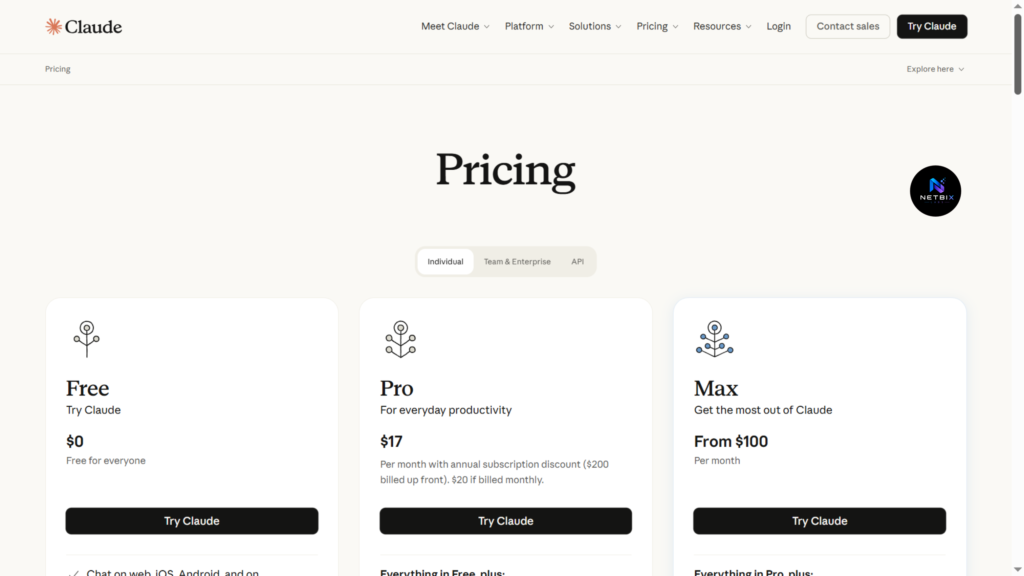
Why it matters: Claude’s official subscription is managed entirely through Anthropic’s website at claude.ai. There is no legitimate reseller channel for Claude subscriptions — any Claude account offered through a third party is unofficial.
What to do:
For individual Pro subscription:
- Go to https://claude.ai — verify the URL carefully
- Click Sign up and create an account using your work email
- Once logged in, click Upgrade to Pro in the left sidebar or go to Settings → Billing
- Select the Pro plan — $20/month or $17/month billed annually
- Enter your payment details on Anthropic’s checkout page
- Complete the subscription — confirmation arrives from an @anthropic.com email address
For Claude Team subscription (5+ users):
- Go to https://claude.com/pricing
- Select the Team plan
- Click Get started
- Set up your organization, invite team members (minimum 5 seats required)
- Choose monthly or annual billing
- Complete payment through Anthropic’s official checkout
How to verify your subscription is official:
- Your account at claude.ai shows your own email as the account owner
- Billing settings show charges from Anthropic
- You created the account yourself — you were not given existing login credentials by someone else
Expected result: A Claude account owned and controlled by you, subscribed directly through Anthropic, with data protections governed by Anthropic’s official privacy policy and terms of service.
Step 3: Subscribe to Google Gemini — Official Process
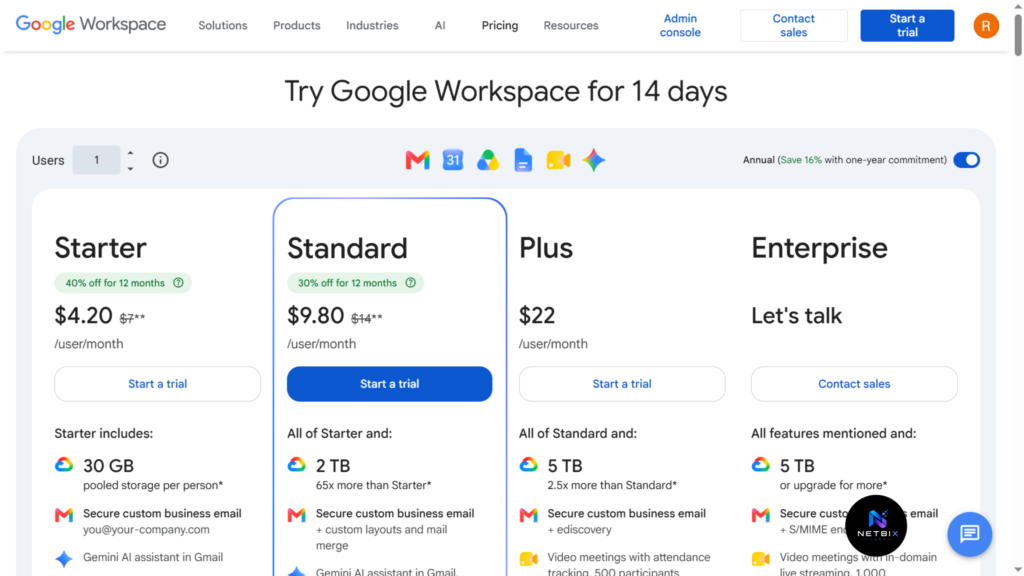
Why it matters: For businesses, Gemini’s meaningful data protections only apply within a Google Workspace plan — not on personal Google accounts. Subscribing through the correct channel ensures you get the business-grade protections your data requires.
What to do:
For individual Gemini Advanced (Google One AI Premium):
- Go to https://one.google.com/about/ai-premium
- Sign in with your Google account
- Click Get started on the AI Premium plan ($19.99/month)
- Complete payment through Google’s checkout
For Gemini within Google Workspace (recommended for businesses):
- Go to https://workspace.google.com/pricing
- Select a Business Starter, Business Standard, or Business Plus plan — Gemini is included in Business plans
- Click Get started
- Create your Google Workspace organization using your company domain
- Add users and complete billing through Google’s official Workspace admin console
How to verify your subscription is official:
- Billing appears in your Google account’s payment history
- For Workspace, your admin console at admin.google.com shows active licenses
- You receive confirmation from a @google.com email address
Expected result: Gemini access through an official Google subscription, with data handling governed by Google’s Workspace terms of service — appropriate for business use with the data protections your organization needs.
Step 4: Configure Your Account’s Data Privacy Settings
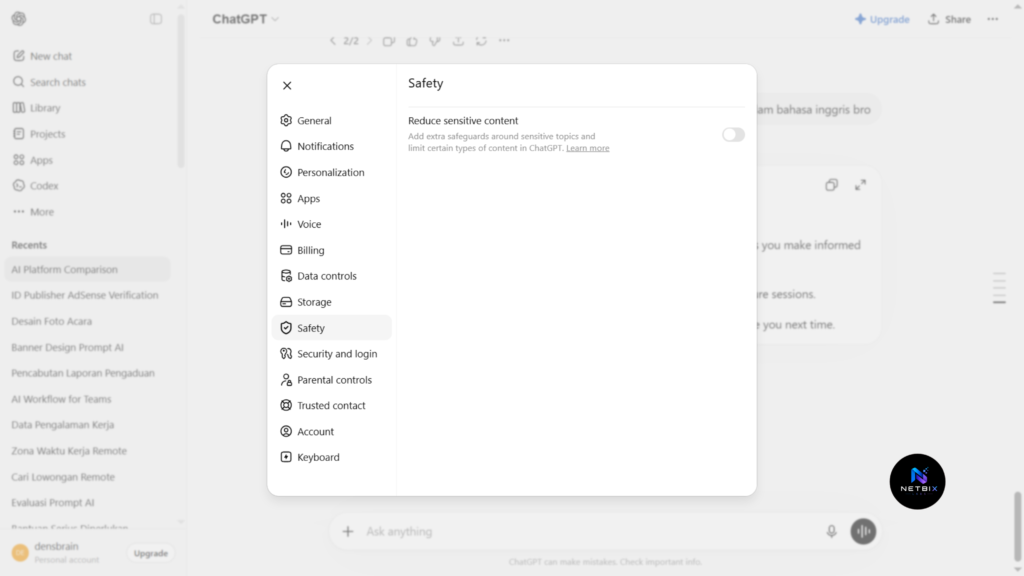
Why it matters: Even on official paid plans, there are data privacy settings that may not be configured optimally by default. Taking five minutes to review these settings ensures your subscription is providing the maximum available data protection.
What to do:
For ChatGPT:
- Go to Settings → Data Controls
- Review Improve the model for everyone — on Plus plans, this may be enabled by default. Turn it off if you want to opt out of your data being used for training
- For Business plans, verify in your admin console that Data not for training is confirmed for your workspace
For Claude:
- Go to Settings → Privacy
- Review data handling settings — on Pro plans, training opt-out is the default, but confirm this is active
- For Team plans, verify in your organization settings that team member data is isolated within your organization’s workspace
For Google Gemini (Workspace):
- In your Workspace admin console at admin.google.com, go to AI and machine learning → Generative AI
- Review and configure data governance settings for your organization
- Confirm that Workspace data is not being used to train Google’s public AI models — this is the default for Workspace business plans
Expected result: All three platforms configured with maximum available data protection — training opt-out active where applicable, data governance settings reviewed, and admin controls confirmed for any team or business plans.
Video Tutorial
This video tutorial is designed in an explanatory format and a step-by-step walkthrough—showing the real-world risks of shared accounts and the proper subscription process on each platform. The video visually demonstrates the differences between a self-controlled official account and a reseller account managed by a third party, followed by the proper forced subscription process on ChatGPT, Claude, and Google Gemini.
How Businesses Use These Platforms Safely
Startups
Early-stage startups often face the temptation of unofficial accounts due to tight budgets. The smarter approach is to start with the free tier of Claude or ChatGPT — which is official, isolated, and carries basic data protections — before moving to a paid business plan as usage grows. Official free tiers are always preferable to unofficial paid accounts.
Marketing Teams
Marketing teams subscribe to ChatGPT Business or Claude Team, with the team workspace configured so client data remains isolated within the company’s account. Client briefs, campaign data, and creative assets are only shared through the official, team-controlled workspace — not through individual accounts or reseller accounts.
HR Departments
HR teams use Google Gemini within their Google Workspace environment — where data governance is configured at the admin level to ensure employee data processed through Gemini stays within the organization’s Workspace and is not used for external model training.
Agencies
Digital agencies subscribe to official team plans and create separate Workspace projects for each client — ensuring client data from one engagement is isolated from other client engagements within the same subscription. Reseller accounts, which cannot offer this kind of project-level isolation, are a genuine liability for agency client relationships.
Operations Teams
Operations teams use official business subscriptions and review their data privacy settings quarterly — confirming that any changes to platform policies are reflected in how the tools are configured, and that team members are using the organization’s official workspace rather than personal accounts.
Enterprise Teams
Large organizations deploy ChatGPT Enterprise or Claude Enterprise — the highest-tier plans with contractually guaranteed data protection, SOC 2 compliance, and dedicated admin controls. Procurement and legal teams review the platform’s Data Processing Agreement before deployment to confirm regulatory compliance.
Best Practices
Always subscribe using your work email, not a personal email. An account created with your personal email address is your personal account — it is not controlled by your organization, cannot be centrally managed, and creates data ownership ambiguity when you leave the company.
Use team or business plans for any work involving sensitive data. Individual Plus or Pro plans are appropriate for personal productivity. For anything involving client data, financial information, or proprietary business content, a business plan with contractual data protections is the correct tier.
Create accounts yourself through official websites. If someone is sending you login credentials rather than an invitation to join an official workspace you can verify, the account is unofficial. Official team subscriptions work by invitation — you create or use your own account, added to a workspace your organization controls.
Review data privacy settings immediately after subscribing. Default settings vary by platform and plan. Spending five minutes reviewing and configuring data controls after subscribing ensures you’re getting the protection you’re paying for.
Centralize your organization’s AI subscriptions through one administrator. Employees purchasing individual AI subscriptions on company credit cards without central oversight creates shadow AI usage — company data processed through accounts that IT and management have no visibility into. A centrally managed team plan addresses this directly.
Check payment receipts to confirm you’re being billed by the official platform. Your credit card statement and email receipts should show charges from OpenAI, Anthropic, or Google — not from a third-party reseller or payment service. If they don’t, the subscription is not official.
Common Mistakes to Avoid
Buying AI accounts through social media marketplaces or messaging apps. This is the most common source of unofficial shared accounts. Any AI tool subscription offered through a third-party seller on social media or purchased via messaging app should be treated as an unofficial account regardless of the price or the seller’s claims.
Using personal accounts for work that involves company data. A personal ChatGPT or Claude account used for work creates data that is neither owned nor controlled by the company — and may be subject to different privacy settings than the business intends. Use business or team accounts for business work.
Assuming all paid accounts are equal. Not all paid tiers offer the same data protections. As noted, ChatGPT Plus tier data may be used for model training by default. Paying for a subscription does not automatically guarantee the maximum available data protection — the specific plan tier matters.
Sharing account credentials with colleagues instead of inviting them properly. Even on official accounts, sharing login credentials between employees means session histories are mixed, there’s no individual accountability for usage, and the account can’t be secured properly. Use the official team or workspace invitation process to add colleagues.
Not reviewing the platform’s data processing agreement before deploying for regulated data. For businesses handling GDPR-protected data, HIPAA-regulated health information, or other regulated categories, the platform’s Data Processing Agreement — a separate document from the standard terms of service — governs how your data is handled. Review this before deploying any AI tool for regulated data processing.
FAQ
Why are shared AI accounts dangerous if they seem to work fine? Shared accounts work functionally — you can still use the AI tool and get useful outputs. The danger is invisible: your prompts and any data you share exist within an account environment controlled by someone else, with no legal obligation on their part to protect your data, and no technical isolation preventing them or other users from accessing your conversation history.
Is the free tier of ChatGPT or Claude safe to use for business? The free tiers of official platforms — accessed through the official website with your own account — are safer than unofficial shared accounts because you own and control the account. However, free tier data may be used for model training, and free plans lack the admin controls needed for team-wide governance. For sensitive business data, a business or team plan is more appropriate.
What should I do if I’m currently using a reseller account? Stop using it for any sensitive business data immediately. Create an official account directly through the platform’s website, subscribe to the appropriate plan for your usage level, and migrate your work to the official account. Do not transfer any session history or data from the reseller account to your new official account.
How can I tell if a Claude or ChatGPT offer is legitimate? Legitimate subscriptions are purchased directly through the platform’s official website — chatgpt.com for ChatGPT and claude.ai for Claude. If you’re being offered access through a third party, asked to pay through an informal channel, or given login credentials rather than being invited to join a workspace you can verify, the offer is not legitimate.
Are there any legitimate ways to get AI tools at a lower price? Yes. Official platforms offer legitimate discounts in specific circumstances — nonprofit discounts, educational institution plans, and regional pricing where available. Some platforms also offer annual billing at a reduced monthly rate. These discounts are documented on the official pricing pages and applied through official subscription processes — not through third-party resellers.
Does my company need to sign a Data Processing Agreement with AI platforms? For businesses handling personal data subject to GDPR, CCPA, or similar regulations, a Data Processing Agreement with your AI tool provider may be legally required. ChatGPT Enterprise, Claude Enterprise, and Google Workspace all offer DPAs. Review your jurisdiction’s requirements and the platform’s available agreements before deploying AI tools for regulated data processing.
Key Takeaways
- Shared and resold AI accounts — common in regions with international payment barriers — expose your business data to account owners, other users, and unauthorized third parties with no legal data protection agreement in place.
- The only way to protect internal data while using AI tools is to subscribe directly through official platforms, on plans that include contractual data protections.
- ChatGPT Business and Enterprise customers receive data-not-for-training guarantees that Plus subscribers do not. The plan tier matters, not just whether the account is paid.
- Claude’s Team and Enterprise plans are contractually protected from training data use. Consumer tiers require explicit opt-in.
- Always subscribe using your work email through the platform’s official website — any subscription offered through a third party at a below-market price should be treated as unofficial.
- Centralize your organization’s AI subscriptions through one administrator with a team or business plan — shadow AI usage through individual personal accounts creates data governance risks that are difficult to manage retroactively.
- Review data privacy settings on every platform immediately after subscribing — default settings are not always the most protective, and five minutes of configuration makes a material difference.
Conclusion
The marketing agency from this guide’s opening didn’t lose data in a dramatic breach. They simply pasted client information into a shared account for months — each prompt visible to a reseller who had no data protection obligation whatsoever — before someone thought to ask where the account actually came from.
This is how most AI data exposure happens in small and mid-sized businesses. Not through sophisticated attacks. Through the mundane decision to buy a cheaper account from a third party rather than subscribe directly through an official platform.
The price difference between an unofficial shared account and an official subscription is rarely more than ten to fifteen dollars per month. The risk difference is not comparable. An unofficial account has no contractual data protection, no session isolation, and no accountability. An official business plan has all three — and the cost is a rounding error against the potential consequences of the alternative.
Subscribe directly. Use your work email. Choose a plan that matches the sensitivity of the data your team handles. Configure your privacy settings. And treat any AI account offered at a significantly below-market price as the risk it almost certainly is.
The data your team handles belongs to your clients, your employees, and your business. It deserves the protection that only an official subscription can guarantee.