If you have tried to get help from a chatbot in the last few years, your instinct is probably to say no — AI customer service is terrible and everyone hates it.
But AI agents for customer service in 2026 are fundamentally different from the rule-based chatbots that gave the entire category a bad reputation.
An AI agent uses large language models to understand intent, access knowledge bases, take action across systems, and escalate only when it cannot resolve the issue itself.
Klarna’s AI assistant handled 2.3 million conversations in its first month, doing the work of 700 full-time agents while maintaining the same customer satisfaction scores.
Gartner predicts that by 2029, 80% of customer service interactions will be resolved autonomously without any human involvement.
Salesforce research shows that 71% of salespeople’s time is spent on non-selling activities, and AI agents for customer service can handle most of that administrative overhead.
These statistics suggest the shift toward AI customer service agents is not just inevitable — it is already happening faster than most businesses realize.
What AI Agents for Customer Service Can Actually Do
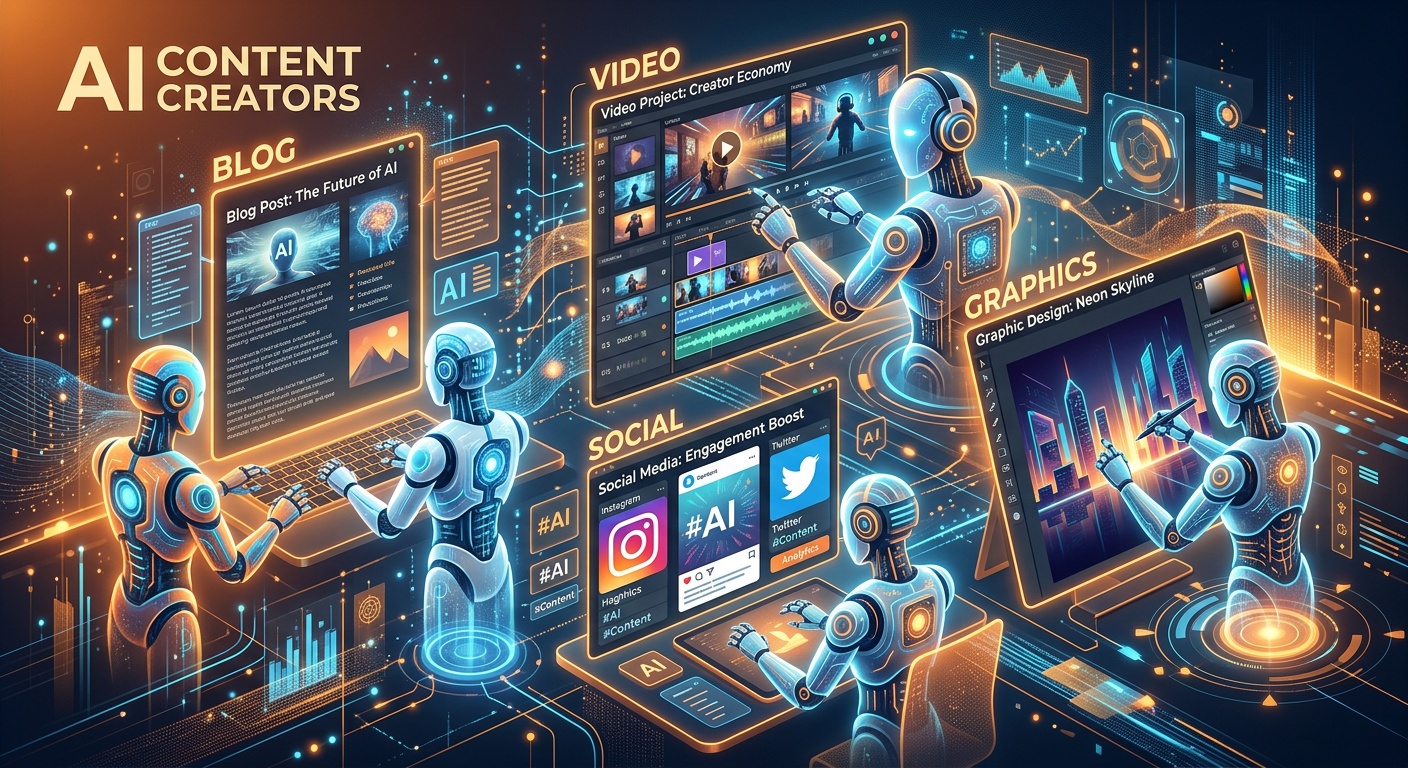
Modern AI agents for customer service go far beyond answering FAQs.
They can check order status, process refunds, update account information, reset passwords, schedule appointments, and escalate complex issues to human agents with a full conversation transcript.
They operate 24/7 across multiple channels including chat, email, phone, and social media.
A well-configured AI agent resolves 60-80% of Tier 1 support tickets without any human touch, according to Gartner’s 2025 projections.
The remaining tickets get routed to human agents who now have more time to focus on complex problems because the simple ones have already been handled.
Small businesses using AI agents for customer service report being able to offer 24/7 support that was previously only affordable for enterprise companies.
The Data Is Clear: Customers Do Not Care If It Is AI
The most surprising finding from real-world deployments is that customer satisfaction scores for AI agents are comparable to or better than human-only support.
Klarna’s AI maintained the same satisfaction scores as its human agents while handling twice the volume.
A PwC study found that 57% of consumers say they have a more positive view of brands that use AI to improve customer service speed.
Google Cloud’s ROI of AI Study (2025) found that among early adopters of agentic AI, 88% reported a positive ROI within the first year.
Customers care about resolution time and accuracy. They do not care whether the agent resolving their issue is human or AI.
Where AI Customer Service Agents Still Struggle
BCG’s Widening AI Value Gap report found that only 5% of companies capture significant value from AI.
The other 95% either fail entirely or see minimal returns.
MIT’s Project NANDA study confirmed this pattern specifically for customer service agents: projects that tried to build custom agents from scratch failed 95% of the time.
The successful deployments used proven platforms from specialized vendors and succeeded about 67% of the time.
The lesson is that AI agents for customer service work — but only when you use the right tools and set realistic expectations.
Our comparison of the best AI agents for business includes customer service-specific platform recommendations.
Watch: AI Agents for Customer Service in 2026
The Verdict on AI Customer Service Agents
AI agents for customer service are not better than human agents in every situation.
They are better at speed, consistency, and scale. Humans are better at empathy, nuance, and handling edge cases.
The winning strategy is not to replace human agents but to augment them with AI.
Companies that deploy AI agents for customer service alongside human teams consistently outperform those that use either pure AI or pure human support.
And that hybrid model is what the data has been pointing to all along.