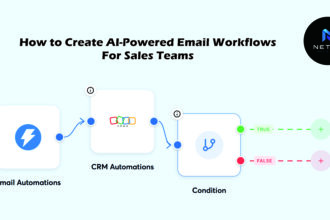
Sales teams spend more time on data entry, prospecting research, and follow-up scheduling than they do on actual selling, and that imbalance is the single biggest reason AI agents for lead generation are taking over the sales pipeline.
Salesforce research consistently shows that salespeople spend only 29% of their time actually selling.
The other 71% goes to administrative tasks, data entry, and research—all of which are exactly what AI agents were designed to automate.
Lead generation is the process of identifying and attracting potential customers, and it is one of the highest-ROI applications of AI in business today.
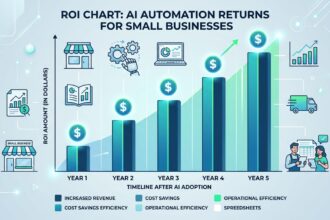
Google Cloud’s ROI of AI Study found that 52% of organizations surveyed use AI agents for sales and marketing functions, and 88% of early adopters reported a positive return on investment.
PwC’s 2026 AI Business Predictions report found that companies using AI agents for sales automation reported 66% productivity gains.
These numbers explain why the agentic AI market is projected to reach USD 93.2 billion by 2032.
How AI Agents for Lead Generation Actually Work
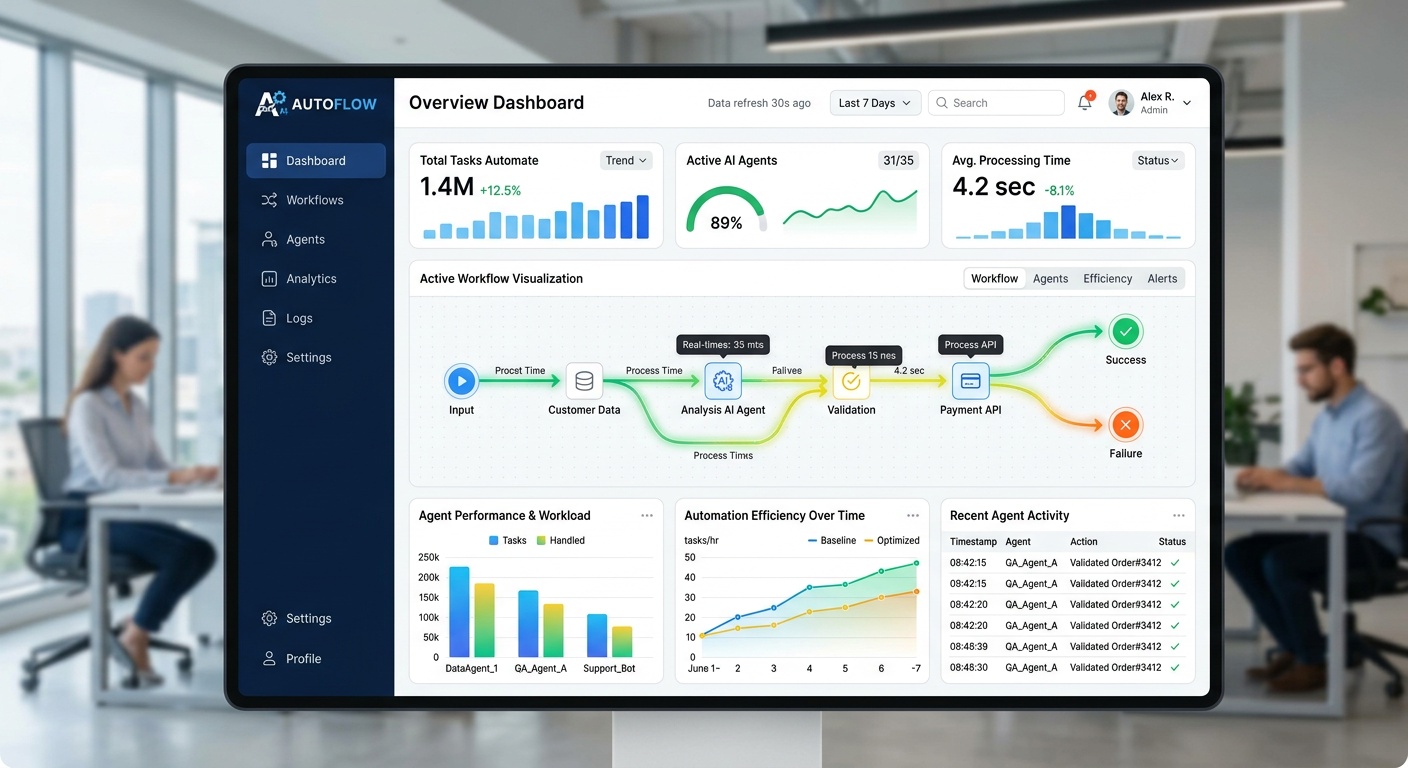
An AI agent for lead generation does not just collect email addresses from websites.
It researches prospects, enriches contact data, scores leads based on intent signals, and drafts personalized outreach messages.
Salesforce Agentforce, for example, handles over a million AI-created sales opportunities per week as of early 2026.
The agent identifies accounts that match your ideal customer profile, gathers intelligence about their business challenges, and writes a tailored introduction email.
Human salespeople then review and send the best ones, focusing their energy on conversations instead of research.
Our guide on AI agents for small business includes the exact workflow for setting up lead generation agents.
The Autonomous Lead Qualification Pipeline
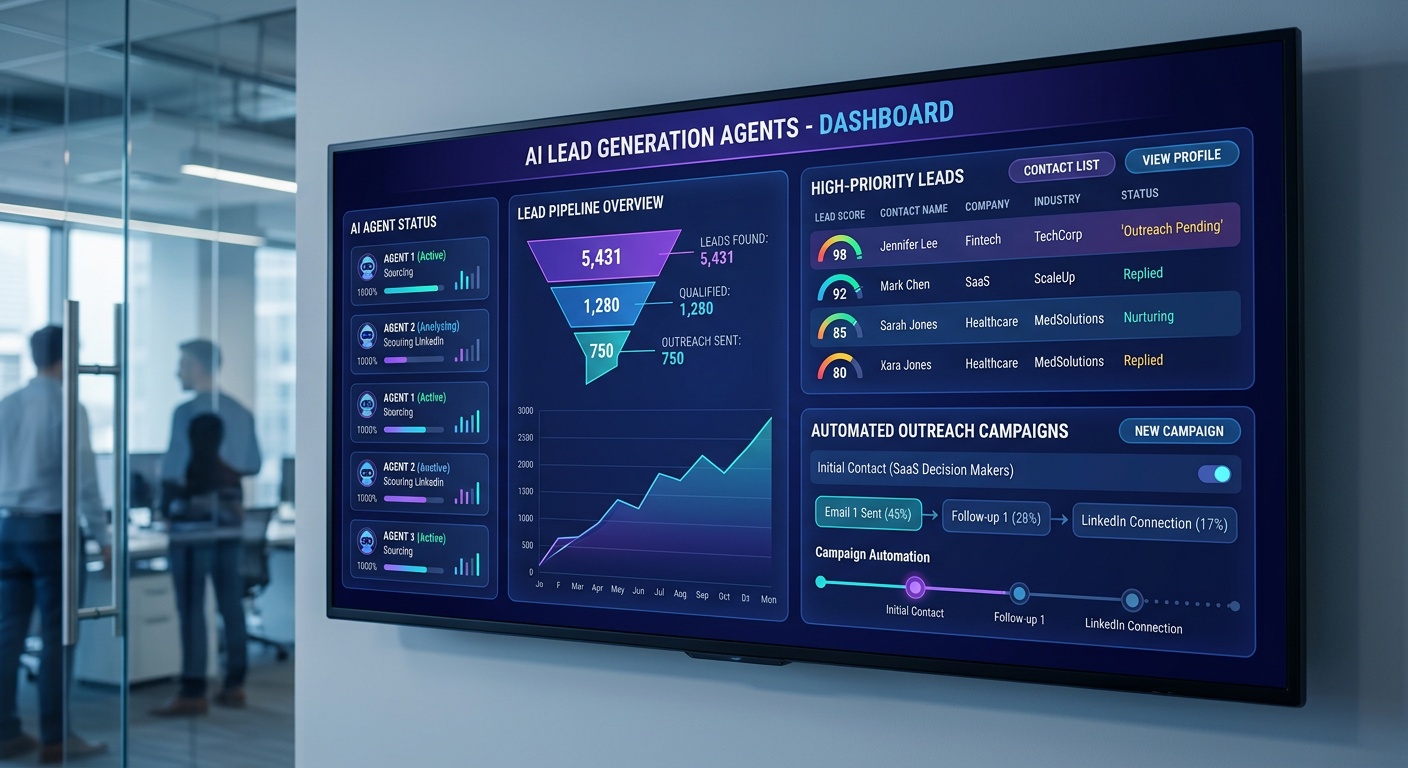
The most powerful use of AI agents for lead generation is in the qualification stage.
Instead of having salespeople spend 20 minutes researching every inbound lead, the agent automatically checks company size, industry, funding, technology stack, and recent news.
It assigns a lead score and routes high-value prospects directly to the sales team with a pre-written brief.
Low-value leads get entered into an automated nurture sequence.
The agent tracks when a prospect re-engages and alerts the sales team the moment a cold lead becomes warm again.
This continuous monitoring happens 24/7 without anyone having to remember to check back.
Leading AI agents for business now include native lead generation modules that connect directly to your CRM.
What the Data Says About AI Lead Generation ROI
MIT’s Project NANDA study analyzed 429 agentic AI implementations across industries.
For lead generation specifically, buying proven AI tools from specialized vendors succeeded 67% of the time, while building custom lead generation agents from scratch succeeded only about 33% of the time.
BCG’s Widening AI Value Gap report found that only 5% of companies capture significant AI value.
The companies that succeed share one pattern: they measure the exact impact of AI on their pipeline velocity, not just on the number of leads collected.
Gartner projects that by 2027, 40% of agentic AI projects will be canceled due to poor planning.
The key insight is that AI agents for lead generation fail when they are deployed without clear metrics and success criteria.
Will AI Agents Replace Your Sales Team?
No, but they will replace sales teams that refuse to use them.
The U.S. Census Bureau’s 2025 Business Trends and Outlook Survey found that 47% of small businesses have adopted AI tools.
The SBE Council reported that the median small business now uses 5 AI tools.
Sales teams that adopt AI agents for lead generation are not laying off their salespeople—they are enabling them to sell more.
When research and data entry are automated, salespeople can have three times as many qualified conversations per day.
A sales team with AI agents is not a team of fewer people. It is a team of higher-performing people.
Start Generating Leads While You Sleep
AI agents for lead generation run 24 hours a day, 365 days a year.
They do not take vacations, lunch breaks, or weekends off.
They are researching prospects and sending outreach while your sales team sleeps.
The businesses that understand this and invest in how to build AI agents for lead generation will have a pipeline advantage that no human-only team can match.