Building an AI agent sounds like something only a machine learning engineer can do, but low code AI agent platforms in 2026 have made it accessible to anyone willing to spend an afternoon learning.
Low-code platforms enable rapid application development with minimal hand-coding.
Gartner estimates 80% of low-code users will be non-developers by 2026.
Google Cloud found 88% positive ROI among early AI adopters.

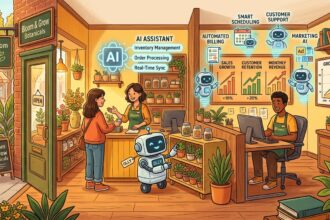
Top low code AI agent platforms in 2026: n8n (open-source, 1000+ integrations), Dify (balanced flexibility), Gumloop (conversational), Lindy (small business focus), Microsoft Copilot Studio (enterprise).
How to build AI agents using low-code platforms complete tutorial.

PwC found 66% productivity gains from low-code AI agent deployments.
MIT recommends buying proven platforms over custom builds.


The Gartner estimate that 80% of low-code users will be non-developers by 2026 matches what I’m seeing, though the real bottleneck is still deciding which tasks deserve an agent in the first place. For simple spatial planning, I’d rather sketch the room and check bed placement for a feng shui bedroom with https://fengshuibedroomdesign.com than build a custom workflow, which reinforces that low-code works best when it removes friction instead of adding another dashboard.