What Is Microsoft Agent Framework?
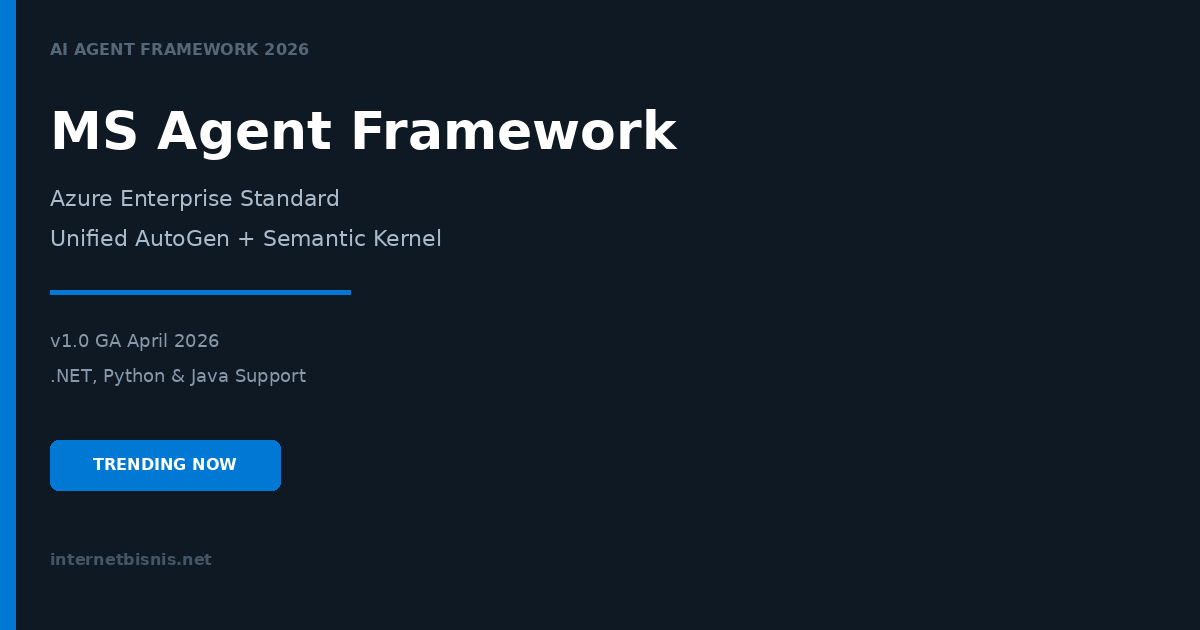
The Microsoft Agent Framework is the consolidated successor to AutoGen and Semantic Kernel, reaching v1.0 General Availability in April 2026. It merges AutoGen’s multi-agent conversation abstractions with Semantic Kernel’s enterprise-grade tooling into a single unified SDK supporting Python, .NET, and Java. For organizations already invested in the Microsoft ecosystem — Azure, .NET, Microsoft 365 — this is the obvious and most natural choice for building production AI agents.
Microsoft Agent Framework Architecture Overview
The framework uses graph-based workflow orchestration similar to LangGraph, but with deeper enterprise integration. It combines AutoGen’s multi-agent conversation patterns with Semantic Kernel’s enterprise middleware — session management, type safety, telemetry, and plugin architecture. The browser-based DevUI provides visual agent design, and Azure Cosmos DB handles state persistence out of the box. Responsible-AI primitives and human approval workflows are baked in at the framework level.
Key Features of Microsoft Agent Framework
- Unified successor to AutoGen and Semantic Kernel
- Graph-based workflow orchestration
- Native .NET, Python, and Java support
- Azure Cosmos DB state persistence integrated
- Application Insights observability out of the box
- Native A2A cross-framework interoperability
- Responsible-AI primitives and human approval workflows
- Browser-based DevUI for visual agent design
Pros of Microsoft Agent Framework
- Best choice for .NET and Azure-native teams
- Cosmos DB and App Insights integrated out of the box
- Responsible-AI and human approval workflows built in
- Native A2A support for cross-framework collaboration
- Supports Python, .NET, and Java in one SDK
- Microsoft enterprise support and SLAs
Cons of Microsoft Agent Framework
- Outside Microsoft ecosystem, LangGraph is a better choice
- Migration from AutoGen 0.2 requires significant engineering work
- Too new to have multi-year production track records
- Fewer community-contributed resources than established frameworks
- Heavy dependency on Azure services for best experience
Best Use Cases for Microsoft Agent Framework
The Microsoft Agent Framework is the default for organizations on the Microsoft stack. Use it for: enterprise agents within Azure infrastructure; .NET teams building AI into existing applications; organizations requiring Microsoft’s enterprise compliance and governance; multi-agent systems needing Azure Cosmos DB persistence; and any deployment where SLAs and enterprise support are mandatory requirements.
Microsoft Agent Framework vs Alternatives in 2026
vs LangGraph: Both use graph-based orchestration, but LangGraph has a larger community and more production track record. MS Agent Framework is the clear winner for .NET/Azure teams. vs Google ADK: Compare based on cloud provider preference — Azure (MS) vs GCP (ADK). vs OpenAI SDK: MS offers deeper enterprise governance; OpenAI SDK is more flexible for rapid development.
Microsoft Agent Framework Adoption and Community in 2026
The Microsoft Agent Framework reached v1.0 GA in April 2026, consolidating the 54,000+ combined GitHub stars of AutoGen and Semantic Kernel. Early enterprise adoption has been strong within the Microsoft ecosystem, particularly among .NET shops and Azure-native organizations. The framework is positioned as the long-term standard for Microsoft AI development.
Getting Started with Microsoft Agent Framework
Install via pip install microsoft-agent-framework or the .NET NuGet package. Use the DevUI to visually design your agent workflows, or write them in code using the graph-based API. The Azure integration means you can have Cosmos DB persistence and Application Insights monitoring working within minutes of setup.
Conclusion: Is Microsoft Agent Framework Right for You?
The Microsoft Agent Framework is the obvious choice for .NET and Azure-native organizations. For teams outside the Microsoft ecosystem, LangGraph offers similar capabilities with less platform coupling. If your organization is already running on Azure and using .NET, the choice is straightforward — this framework will have the deepest integration and best long-term support.
Learn More About Microsoft Agent Framework
Explore more AI agent frameworks:
- LangGraph Guide
- CrewAI Guide
- OpenAI Agents SDK Guide
- Claude Agent SDK Guide
- Google ADK Guide
- Pydantic AI Guide
- LlamaIndex Guide
- Mastra Guide
- Hermes Agent Guide
- Smolagents Guide
- Dify Guide
Also check out our AI Tools and Artificial Intelligence categories for more in-depth coverage.