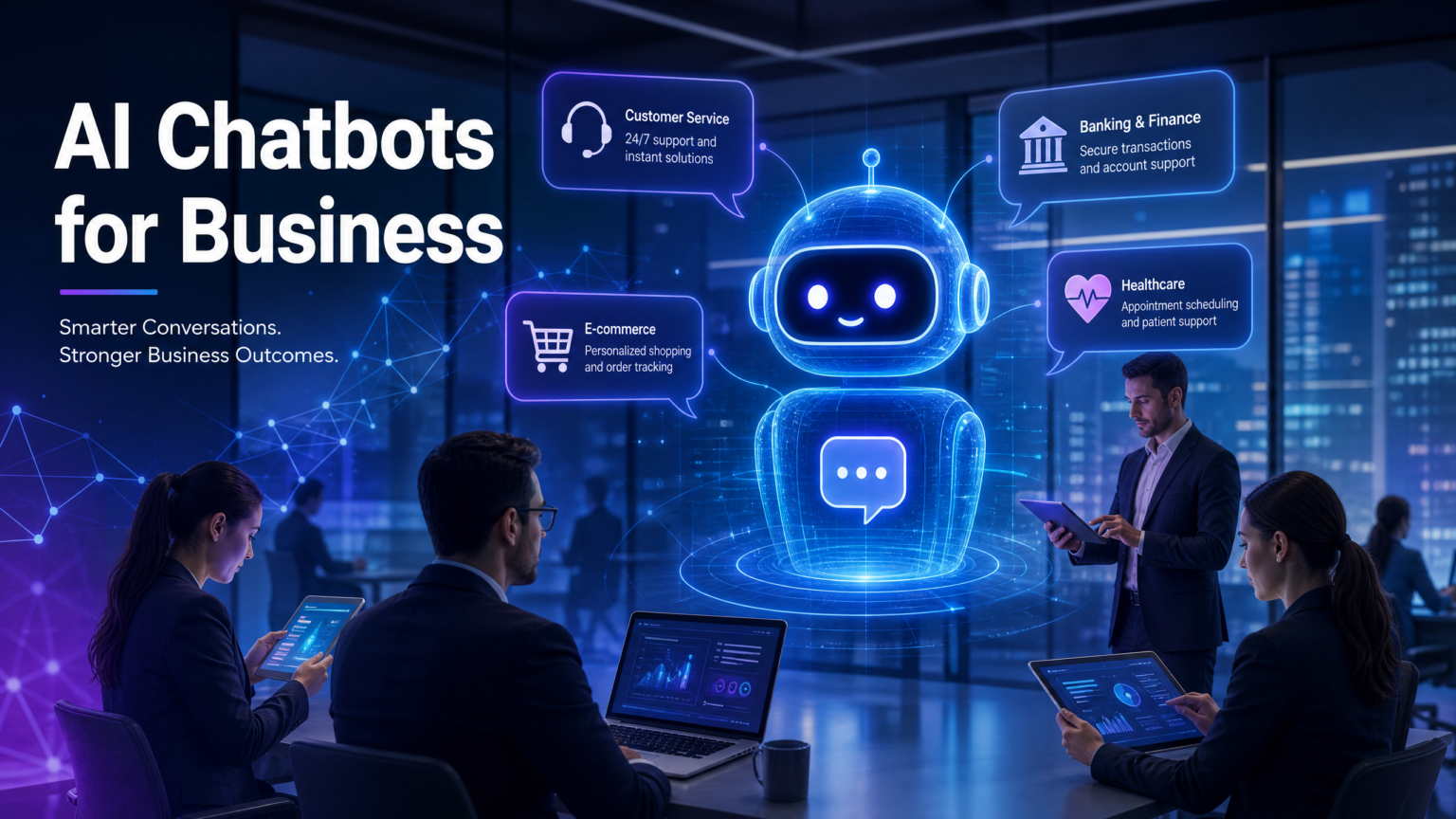
In today’s fast-paced business environment, customer expectations have never been higher. Companies must respond to inquiries instantly, provide personalized support across multiple channels, and maintain consistent service quality around the clock. This is where AI chatbots for business have become indispensable. These intelligent conversational systems are revolutionizing how organizations interact with customers, streamline operations, and drive revenue growth.
AI chatbots powered by natural language processing (NLP) and machine learning can understand customer intent, provide accurate responses, and continuously improve through every interaction. Unlike traditional rule-based chatbots, modern AI chatbots learn from data, adapt to context, and deliver human-like conversations that keep customers satisfied and engaged.
What Are AI Chatbots and How Do They Work?
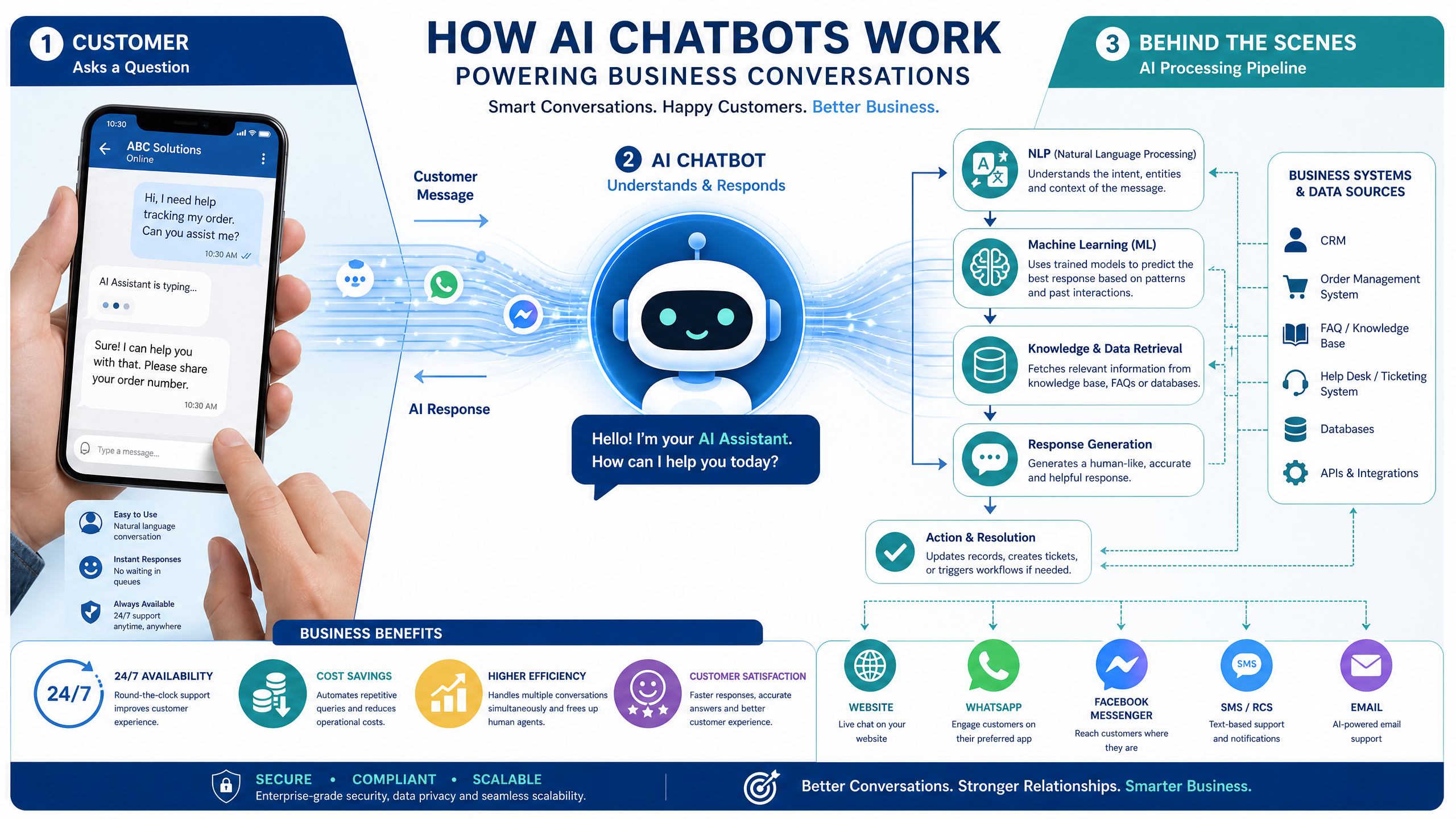
An AI chatbot is a software application that uses artificial intelligence, machine learning, and natural language processing to simulate human conversation. Unlike traditional chatbots that follow predetermined scripts, AI chatbots can understand complex customer queries and nuanced language, generate contextually relevant responses, learn from past interactions to improve future conversations, handle multiple topics simultaneously, and integrate with business systems to access real-time information.
Modern AI chatbots operate through several key technologies. Natural Language Processing (NLP) enables chatbots to understand human language in all its complexity, including slang, colloquialisms, and context-dependent meanings. Machine Learning algorithms help chatbots improve their responses over time, with each interaction providing data that makes the system more accurate and helpful. Large Language Models (LLMs) like GPT-4 or specialized business models generate human-quality responses across diverse topics. Intent Recognition allows AI chatbots to identify what customers actually want to accomplish, not just the words they use.
Key Benefits of AI Chatbots for Business
1. 24/7 Customer Support
AI chatbots never sleep. They provide instant responses to customer inquiries at any time, day or night, across all time zones. This eliminates frustrating wait times and ensures customers always have access to help when they need it. Companies report a 40-50% reduction in customer support costs by deploying chatbots that handle routine inquiries, allowing human agents to focus on complex issues requiring personal attention.
Watch: AI Chatbots for Business — Video Guide
2. Increased Operational Efficiency
By automating repetitive tasks and routine inquiries, AI chatbots free up your team to focus on high-value activities. A telecommunications company that implemented an AI chatbot now handles billing inquiries, plan changes, and technical troubleshooting automatically. The system resolves 65% of issues without human intervention, reducing support ticket volume by 45%.
3. Improved Customer Experience
Modern customers expect instant, personalized service. AI chatbots deliver exactly that through instant response with no waiting in queues, personalization by accessing customer history to provide tailored recommendations, consistency ensuring every customer receives the same high-quality service standard, and multi-channel support across website, mobile app, Facebook Messenger, WhatsApp, or other platforms.
4. Cost Reduction and Revenue Growth
The financial benefits of AI chatbots are substantial. Support costs decrease by 30-50%, while chatbots can recommend products, upsell, and cross-sell 24/7. Better customer service leads to improved retention, and quick issue resolution improves customer satisfaction scores. According to recent industry research, businesses implementing AI chatbots see an average ROI of 300% within the first year.
Real-World Applications of AI Chatbots
E-Commerce and Retail
Retail businesses use AI chatbots to help customers find products, answer questions about specifications and pricing, process returns and exchanges, provide personalized product recommendations, and handle order tracking inquiries. One online fashion retailer increased average order value by 18% through intelligent product recommendations and reduced return rates by 12% by providing detailed product information upfront.
Banking and Financial Services
Financial institutions deploy chatbots for account balance inquiries, transaction history and statements, loan application processing, fraud detection and security alerts, and investment advice. Major banks report that AI chatbots handle 80% of routine customer inquiries, reducing the need for human tellers and improving customer satisfaction scores by 25%.
Healthcare and Telemedicine
Healthcare providers use chatbots to schedule appointments, collect patient medical history, provide symptom assessment, deliver medication reminders, and answer insurance questions. Healthcare organizations using chatbots report 40% fewer missed appointments and 35% reduction in administrative staff workload.
Implementing AI Chatbots: A Step-by-Step Guide
Before implementing an AI chatbot, clearly define what you want to achieve. What customer problems will the chatbot solve? What metrics will indicate success? Which customer segments will interact with the chatbot? What integration with existing systems is required?
Several platform options are available. Pre-built Solutions like Intercom, Drift, and Zendesk offer ready-made chatbot solutions that require minimal customization. AI-Powered Platforms like IBM Watson, Google Dialogflow, and Microsoft Bot Framework provide more customization options. Custom Development is ideal for unique requirements with specialized AI development teams.
Map out how customers will interact with your chatbot by identifying the most common customer inquiries, determining how the chatbot should handle complex or unclear requests, deciding when conversations should escalate to human agents, and defining the tone and personality the chatbot should have.
Train your chatbot with historical customer service conversations, product information and documentation, company policies and procedures, industry-specific terminology, and common customer questions and answers. Before launching, thoroughly test the chatbot to ensure it understands various ways customers phrase questions, provides accurate information, escalates appropriately to human agents, and delivers natural, helpful conversations.
Measuring Success: Key Performance Indicators
| KPI | Description | Target |
|---|---|---|
| Customer Satisfaction (CSAT) | Post-conversation satisfaction surveys | 80%+ satisfaction rate |
| Resolution Rate | Issues resolved without human intervention | 60-80% depending on industry |
| Response Time | Time from inquiry to chatbot response | Under 2 seconds |
| Conversation Completion Rate | Conversations reaching satisfactory conclusion | 75%+ |
| Cost Per Interaction | Total operating cost divided by interactions | Track reduction over time |
Future Trends in AI Chatbots
The future of AI chatbots is incredibly exciting. Multimodal Interactions will allow future chatbots to seamlessly combine text, voice, video, and images. Emotional Intelligence will enable advanced chatbots to recognize customer emotions and adjust their responses accordingly, providing empathetic support when customers are frustrated or upset. Proactive Engagement means chatbots will reach out with relevant offers, reminders, and assistance based on customer behavior and preferences rather than waiting for customers to initiate contact.
We’ll also see increasingly specialized chatbots designed for particular industries, with deep domain knowledge built in, and smooth human-AI collaboration where chatbots provide context and recommendations to help agents serve customers more effectively.
Related Reading
If you’re interested in expanding your AI knowledge beyond chatbots, explore these related topics on our blog:
- How AI Agents Can Automate Business Research and Reporting
- How Small Businesses Use AI to Reduce Operational Costs
- How to Build AI-Powered Approval Systems for Corporate Teams
- How AI Is Transforming HR and Employee Training
Conclusion
AI chatbots for business have evolved from novelty features to essential business tools. They provide measurable benefits in customer satisfaction, operational efficiency, and cost reduction. Whether you’re in retail, finance, healthcare, or any other industry, implementing an AI chatbot can transform how you serve customers and operate your business.
The key to success is choosing the right solution for your specific needs, implementing it thoughtfully, and continuously improving based on real-world performance data. Start with a pilot program, measure results carefully, and scale gradually as you gain confidence and expertise. The future belongs to businesses that embrace AI-powered customer service — and by implementing AI chatbots today, you’re positioning your organization for success in an increasingly competitive marketplace.